


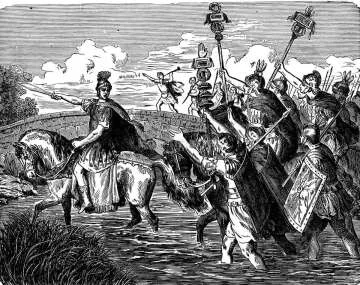
The Moment of Choice: Crossing the Rubicon
In 49 BC, one pivotal moment changed the course of Roman history: Julius Caesar's daring decision to cross the Rubicon River. This act was not merely a physical crossing but a profound political statement that defied the authority of the Roman Senate. By crossing the Rubicon, Caesar laid the groundwork for a dramatic shift in the Roman political landscape, which would culminate in the rise of his dictatorship.
Julius Caesar’s Bold Declaration
As he stood on the banks of the Rubicon, Caesar famously declared, "alea iacta est" (the die is cast). This phrase aptly encapsulated the gravity of the moment, indicating that the decision was irreversible. Crossing the river symbolized a point of no return; it marked the beginning of the civil war, where loyalties would be tested, and the future of Rome would be at stake.
The Senate’s Ultimatum to Julius Caesar
Prior to this moment, tensions had been mounting between Caesar and the Roman Senate, which feared his growing power and popularity. The Senate’s directive for Caesar to disband his army and return to Rome was perceived as a threat to his power. By choosing to cross the Rubicon with his loyal legions, he directly challenged the Senate's authority, marking himself as a revolutionary.
The Aftermath of the Rubicon Crossing
The ramifications of Caesar's crossing were monumental and profound, setting off a series of conflicts that would reshape Rome. The civil war that followed saw Caesar emerge victorious, ultimately leading to his appointment as dictator for life. This established a precedent for future leaders and the eventual transformation of the Roman Republic into the Roman Empire.
The Civil War and Its Consequences
Following the crossing of the Rubicon, Caesar engaged in a series of military campaigns against the Senate's forces, most notably in the battles of Pharsalus and Munda. His victories further solidified his power and influence and laid the groundwork for the eventual establishment of imperial rule in Rome.
Julius Caesar’s Legacy
Despite his success, Julius Caesar's concentration of power alarmed many, leading to his assassination in 44 BC. However, the phrase “the die is cast” remains a testament to his bold leadership and the transformative era that began with his fateful decision to cross the Rubicon.
Fun Fact
The Rubicon River’s Significance
The Rubicon river is a small waterway in northern Italy today, yet its significance in history is monumental. The phrase “crossing the Rubicon” has become a metaphor for taking an irrevocable step into the unknown, reflecting the weight of major decisions in life.
Additional Resources
Recommended Reading on Julius Caesar
For those interested in exploring more about Julius Caesar and his era, consider reading "Caesar: Life of a Colossus" by Adrian Goldsworthy and "The Twelve Caesars" by Suetonius. These works provide rich context and fascinating insights into the life and legacy of one of history's most significant figures.








 Continue with Google