


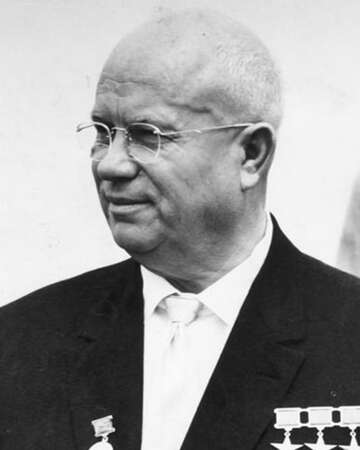
A Revolutionary Statement in Nuclear History
In 1963, during a period marked by the Cold War tensions, Soviet Premier Nikita Khrushchev made a shocking announcement that would reverberate through the corridors of power across the globe. He claimed that the Soviet Union had developed a 100-megaton nuclear bomb, a weapon of unprecedented destructive power. This revelation not only highlighted the escalating arms race between the United States and the Soviet Union but also significantly impacted the global perception of nuclear warfare.
Khrushchev's Nuclear Ambitions
Nikita Khrushchev, born on April 15, 1894, in Kalinovka, Russia, was the leader of the Soviet Union from 1953 until 1964. Under his leadership, the Soviet Union made significant advancements in nuclear technology. Khrushchev’s claim about a 100-megaton bomb was part of a broader strategy to project strength and deter Western adversaries. By asserting the development of such a bomb, he aimed to showcase the USSR's scientific capabilities and reinforce its position as a superpower.
The Impact of the Bomb Claim
The announcement of the 100-megaton bomb ignited fears of an escalating arms race. Many analysts believed that if the Soviets possessed such a weapon, the stakes for global conflict were raised exponentially. The U.S. government, under President John F. Kennedy, responded with an urgent reassessment of its own nuclear arsenal and strategies. The statement added a new layer of tension to an already fraught international landscape.
Scientific and Strategic Implications
The claim about Khrushchev's 100-megaton bomb was not just a casual assertion; it had profound scientific and strategic implications. It required sophisticated advancements in nuclear research, engineering, and testing. Khrushchev's announcement was viewed as both a technological achievement and a strategic threat that necessitated a response from the West.
The 100-Megaton Bomb's Characteristics
A 100-megaton bomb would have been capable of causing massive devastation, with the potential to obliterate entire cities. For context, this yield was notably higher than the bombs dropped on Hiroshima and Nagasaki, which were approximately 15 and 20 kilotons, respectively. The scale of destruction implied by Khrushchev's claim was staggering and contributed to global anxiety about nuclear warfare.
Khrushchev and the Balance of Power
Khrushchev’s declaration was aimed at maintaining a balance of power during a time of competition with the West. By showcasing such capabilities, he intended to bring the United States to the negotiating table from a position of strength. This situation led to further developments in arms control efforts, including the eventual signing of the Limited Test Ban Treaty later that same year.
Fun Fact
Khrushchev’s Interesting Propaganda Tactic
Interestingly, the 100-megaton bomb claim was partly a propaganda tactic used by Khrushchev to influence public perception and morale both within the Soviet Union and among foreign audiences. The announcement showcased Soviet prowess and technology at a time when socialism was facing scrutiny and competition from capitalist nations.
Additional Resources
Recommended Reading on Nikita Khrushchev
For those interested in delving deeper into this pivotal figure and the era of the Cold War, books such as The Khrushchev Era by David E. N. Bender and Khrushchev: The Man and His Era by William Taubman provide great insights into his leadership and policies.










 Continue with Google