


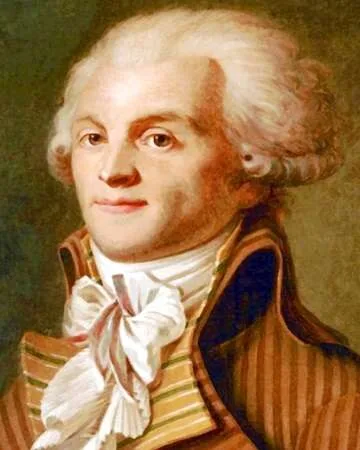
The Accusations of Marc-David Lasource Against Robespierre
In the tumultuous political climate of early revolutionary France, a significant moment occurred in 1792 when Marc-David Lasource boldly accused Maximilien Robespierre of seeking to establish a dictatorship. This accusation marked a pivotal turn in the power struggles that characterized the French Revolution. Lasource, a prominent member of the Girondins, represented a faction that was increasingly alarmed by Robespierre's growing influence within the revolutionary government.
Why Lasource Targeted Robespierre
Lasource's accusations stemmed from a deep concern for the future of the Revolution. As Robespierre, a leading figure of the Montagnard faction, advocated for stricter measures and centralized control, many—including Lasource—began to believe that his vision threatened the very liberties the revolutionaries fought for. Lasource expressed fears that Robespierre's push for a stronger executive power could lead to a government reminiscent of the tyrannies they sought to abolish.
The Impact of Lasource's Claims
The accusation struck at the heart of revolutionary ideals, stirring debates and divisions among revolutionary leaders. Lasource's rhetoric aimed to rally the Girondins, who valued a decentralized government and individual liberties. By painting Robespierre as a potential dictator, Lasource sought to safeguard the revolution's democratic principles.
The Consequences of the Allegations
The fallout from Lasource's charges against Robespierre played a crucial role in shaping the power dynamics of the National Convention. Robespierre, known for his eloquent speeches and passionate defense of the Revolution, fought back against the claims, framing them as an attack on the necessary measures to protect France.
Political Divisions Emerge
Lasource’s accusations were not merely personal but indicative of a broader ideological rift between the Girondins and the Montagnards. This division eventually culminated in a struggle for dominance, where both factions would fight for the revolutionary agenda, with Robespierre's influence eventually leading to the execution of prominent Girondin leaders.
Robespierre's Response
In response to Lasource's claims, Robespierre defended his actions and the necessity for a strong government to secure the Republic. He argued that the threats posed by foreign monarchies and internal dissent justified extraordinary measures, enhancing his authority while attempting to quell opposition.
Fun Fact
Lasource's Interesting Contribution
Besides his accusations against Robespierre, Marc-David Lasource's role as a Girondin represented a critical perspective in the Revolutionary debates. His eloquence in the National Convention highlighted the importance of dissenting voices in shaping political discourse during one of France's most chaotic periods.
Additional Resources
Recommended Reading on the French Revolution
To delve deeper into this fascinating period, consider reading The French Revolution: A Very Short Introduction by William Doyle or Citizens: A Chronicle of the French Revolution by Simon Schama. These works provide a thorough examination of the key figures and events that defined the Revolution, including the rivalries between Lasource and Robespierre.










 Continue with Google