


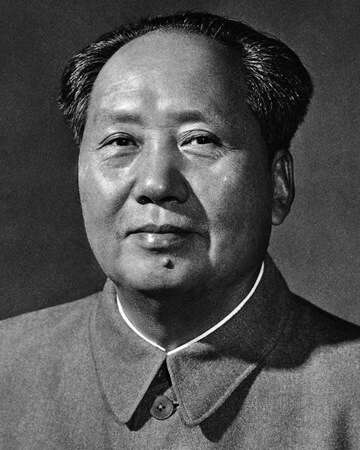
The Creation of 'Reply to Comrade Kuo Mo-jo'
In 1963, during a tumultuous period in Chinese history, Mao Zedong, the Chairman of the Communist Party of China, composed the poem 'Reply to Comrade Kuo Mo-jo'. This piece was not merely a literary work but a significant political statement that showcased Mao's views on revolutionary ideals and the inspirations that collectively shaped the nation.
Mao Zedong’s Inspiration
Mao Zedong's poem was initially a response to Comrade Kuo Mo-jo, who had expressed his admiration for Mao’s earlier literary works. Kuo, a noted writer and supporter of the Communist regime, demonstrated how ideologically driven literature could foster national pride and unity among the Chinese populace. In this reply, Mao emphasizes the values of socialism and the importance of intellectual engagement in promoting revolutionary thought.
The Themes in Mao's Poem
In 'Reply to Comrade Kuo Mo-jo', the overarching themes include resilience, dedication to the revolutionary cause, and the significance of collective effort. The imagery used throughout the poem reflects the struggles of the time while reminding readers of the eventual triumph of the communist movement in China. The poem serves as a rallying cry for unity against oppression, appealing directly to the hearts and minds of the Chinese people.
Significance of the Poem in 1963 China
The year 1963 was marked by social and political upheaval. Mao’s poem played a vital role in reinforcing the ideologies of the Chinese Communist Party and was used as a means to galvanize support among the public. Its publication was a clear indication of Mao's intention to use culture and poetry as tools for political expression, reflecting the ongoing struggle for Chinese socialism in a changing world.
A Political Weapon
During this period, poetry was often weaponized as a form of propaganda. By encouraging artistic expression that adhered to socialist ideals, Mao sought to control how revolution was envisioned in society. 'Reply to Comrade Kuo Mo-jo' exemplifies how literature intertwined with politics, crafting a narrative that many citizens could identify with and strive toward.
Reflections on Revolution
The poem also serves as a historical reflection, providing insights into the mindset of Mao's regime. By situating the poem within the broader context of Chinese society in 1963, readers can grasp how Mao's ideals influenced artistic expressions and how literature itself was a means of articulating and challenging the status quo.
Fun Fact
Mao Zedong's Poetry
Interesting to note is that Mao was not just a political leader but an avid poet. He produced a variety of works, often drawing on historical narratives and classical Chinese traditions to express his beliefs, making him a unique figure in combining poetry with politics.
Additional Resources
Recommended Reading on Mao Zedong
For those interested in exploring more about Mao Zedong’s literary contributions and his political impact, consider reading 'The Writings of Mao Zedong, 1949-1976' and 'Mao: The Unknown Story' by Jung Chang and Jon Halliday. These works provide a deeper understanding of his philosophies and their ramifications on Chinese society.




 Continue with Google