


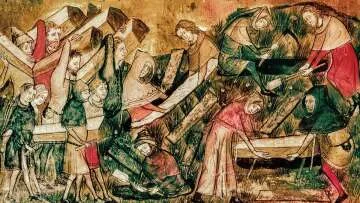
The Start of a Catastrophic Era: The Plague in England
In 1348, a dark chapter was set to begin in the annals of English history when a ship from Bordeaux docked in Melcombe Regis, now known as Weymouth, Dorset. This vessel unknowingly harbored the highly contagious Black Death, which would rapidly spread across the nation and beyond, resulting in the deaths of a significant portion of the population.
The Black Death, a term commonly used to describe this devastating plague, is believed to have been caused by the bacterium Yersinia pestis. This bacterium was transmitted through fleas that infested rats. The arrival of this ship marked the beginning of the terrifying pestilence that would devastate communities, disrupt the social order, and bring about profound changes to English society.
The Ship from Bordeaux and Its Unforeseen Consequences
The ship that landed in Melcombe Regis had innocently made its journey from Bordeaux, a notable trading port in France. It carried goods and perhaps even passengers who were unaware that they were bring with them more than just trade. Once the plague found its way onto English soil, it started mercilessly claiming lives, creating an atmosphere of fear and despair across the nation.
Weymouth: The First Point of Infection
Melcombe Regis, the site of the first known landing of the plague, quickly became infamous for being the origin of the Black Death in England. As infected individuals began to disperse into surrounding areas, the impact of the plague became catastrophic, spreading not only through cities but also into rural communities.
The Devastation of the Black Death Across England
In the years following the arrival of the plague, England faced unimaginable hardship. The disease spread rapidly, leading to a high mortality rate that transformed every aspect of life.
The Impact on Population and Society
The most staggering result of the Black Death was the dramatic reduction in population. It is estimated that up to one-third of England's population perished within just a few years. This loss had profound implications, leading to labor shortages and subsequent changes in the social fabric, including shifts in the feudal system.
Cultural and Economic Changes Post-Plague
As towns were emptied and farms lay abandoned, surviving individuals were often able to demand higher wages. The cultural landscape shifted, too, as fear of the disease led to essential changes in the way people viewed life, death, and religion. The creative endeavors of the time were driven by the emotional weight of this traumatic period as well.
Fun Fact
The Black Death in Literature
The profound impact of the Black Death is reflected not only in historical accounts but also in literature. Works such as Geoffrey Chaucer's The Canterbury Tales provide insight into the societal views of death and morality during and after the plague.
Additional Resources
Recommended Reading on the Black Death
For those interested in further exploration, consider reading A Distant Mirror: The Calamitous 14th Century by Barbara Tuchman and The Black Death: A New History of the Great Plague by John Aberth. Both offer detailed insights into the effects of the plague on Europe.













 Continue with Google