


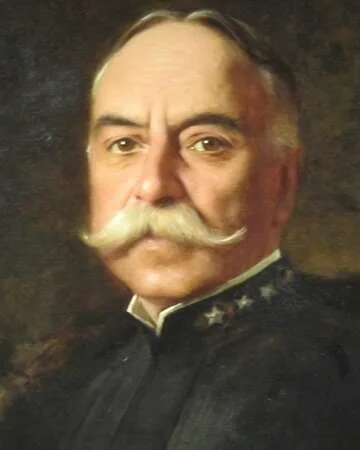
The Historic Command at Manila Bay
The Battle of Manila Bay, fought on May 1, 1898, became a defining moment in the Spanish-American War. Under the command of Admiral George Dewey, the United States Navy achieved a remarkable victory against the Spanish fleet that signaled the decline of Spanish colonial power and the emergence of the U.S. as a global naval power. The pivotal moment of the battle was marked by Dewey's famous words, "You may fire when you are ready, Gridley," which epitomized the decisive action that led to the American triumph.
Setting the Stage for Admiral Dewey
Admiral George Dewey was born in 1837 in Vermont and became a prominent naval officer known for his strategic insight and leadership during the late 19th century. By 1898, he had risen to the rank of admiral and was tasked with leading the U.S. naval forces in the Pacific. His bold decision to engage the Spanish fleet at Manila not only showcased his military acumen but also his understanding of the geopolitical landscape.
The Moment of Command
On the fateful morning of May 1, Dewey’s squadron approached Manila Bay, with intelligence suggesting a poorly positioned Spanish fleet. As his ships lined up for the impending battle, Dewey reportedly steeled his resolve and signaled his squadron commander, Captain Charles Gridley, with the now-legendary words to commence fire. This moment was not just a tactical command; it represented a critical turning point for the United States in its quest for global influence.
The Aftermath of the Battle
The outcome of the battle was a resounding victory for the United States. The Spanish fleet was completely destroyed with minimal loss to American forces, solidifying Dewey’s reputation as a hero and ensuring that the U.S. would play a significant role in the Pacific moving forward. The triumph at Manila Bay also inspired a surge of nationalism and support for U.S. engagement overseas.
Impact on Spanish-American Relations
In the wake of the battle, the Spanish government was thrown into disarray as the loss highlighted the weakening of their empire. The victory at Manila Bay directly contributed to the eventual surrender of Spanish forces in the Philippines and paved the way for the Treaty of Paris in December 1898, which saw Spain cede the Philippines, Guam, and Puerto Rico to the United States.
Dewey's Legacy
Admiral Dewey's decisive command and the victory at Manila Bay marked a significant chapter in military history, showcasing the importance of naval power in international relations. His legacy would influence naval strategies for generations, and his actions at Manila are still studied in military academies today.
Fun Fact
The Unusual Role of Dewey's Flagship
Admiral Dewey's flagship, the USS Olympia, was originally designed in the late 1800s and is regarded as one of the first modern warships. Today, this historic vessel is a museum ship, allowing visitors to explore the legacy of the U.S. Navy and its role in the Spanish-American War.
Additional Resources
Recommended Reading on Admiral George Dewey
If you’re interested in learning more about Admiral Dewey and the Spanish-American War, consider reading "The Victory at Manila Bay" by Richard O’Connor and "Admiral Dewey: A Biography" by William P. MacKinnon. These works delve deeper into the events leading to the battle and the repercussions of Dewey’s victory.





 Continue with Google