


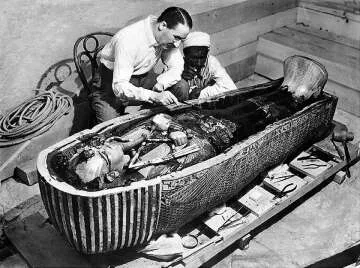
Tutankhamun's Tomb: A Glorious Discovery
On November 4, 1922, archaeologist Howard Carter made a monumental discovery in the Valley of the Kings, Egypt. After years of searching, he uncovered the entrance to the tomb of the young pharaoh Tutankhamun, who ruled in the 14th century BCE. However, it was not until 1923 that Carter opened the innermost chamber of this tomb, unveiling treasures that would captivate the world.
Howard Carter’s Expedition to the Tomb of Tutankhamun
Howard Carter was a British archaeologist renowned for his expertise in ancient Egypt. His expedition was funded by Lord Carnarvon, who was equally fascinated by Egyptian antiquities. After facing years of disappointments, the pair's perseverance finally paid off with the discovery of the burial site of the young pharaoh, Tutankhamun. The opening of the burial chamber revealed a treasure trove, including the magnificent sarcophagus containing the king's mummified body.
The Significance of the Sarcophagus
The sarcophagus itself was a masterpiece of ancient Egyptian craftsmanship, made from quartzite and decorated with intricate carvings and inlays. This grand coffin was found within a series of nested coffins, the outermost being made of wood coated in gold. The discovery of the sarcophagus was crucial not just for the wealth of artifacts it held but for the insight it provided into the burial practices and beliefs of the ancient Egyptians.
The Hushed Rooms of the Pharaoh
Beyond the dazzling riches, the burial chamber of Tutankhamun contained a wealth of significant artifacts, including chariots, weapons, and personal items. These objects offered a glimpse into the life and times of the young ruler, whose reign lasted only a decade before his untimely death at about age eighteen.
Exploring the Treasures of Tutankhamun
In addition to the sarcophagus, archaeologists uncovered a stunning array of gold adornments, furniture, and ceremonial objects. One of the most astonishing finds was the iconic gold mask of Tutankhamun, which has become a symbol of ancient Egypt. Each artifact sparked interest and curiosity, eliciting questions about the mysterious ruler’s life and the reasons behind his early death.
The Impact of the Discovery on Archaeology
The discovery of Tutankhamun’s burial chamber marked a turning point in archaeology. It ignited a global fascination with ancient Egypt and led to increased funding for archaeological digs. The treasures found in the tomb not only showcased the artistry of the time but also highlighted the need to preserve cultural heritage for future generations.
Fun Fact
Tutankhamun’s Curse
One of the more sensationalized aspects of the discovery was the so-called "Curse of the pharaohs." After the tomb's opening, several individuals linked to the excavation died under mysterious circumstances, giving rise to this legend. However, modern science attributes these occurrences to natural causes.
Additional Resources
Recommended Reading on Tutankhamun
For those intrigued by Tutankhamun’s story, consider exploring The Complete Tutankhamun: The King, the Tomb, the Royal Treasure or Tutankhamun: The Pharaoh and the Birth of Contemporary Egypt for deeper insights into his life and the significance of the tomb's discovery.





 Continue with Google