


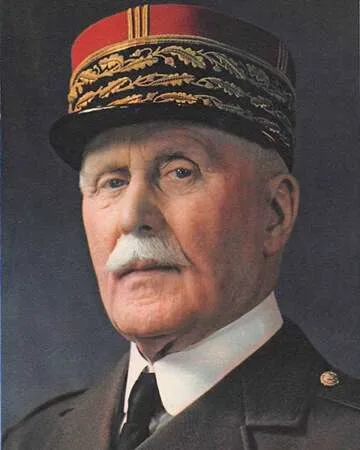
Understanding Philippe Pétain's Birth and Impact
Born on April 24, 1856, in Cauchy-à-la-Tour, France, Philippe Pétain would rise to significant prominence as a French marshal and Chief of the French State during a tumultuous period in France's history. Pétain's life is a compelling tale of military prowess intertwined with a controversial legacy.
The son of a farmer, Pétain's early days in Cauchy-à-la-Tour shaped his character. His military career commenced after he attended the École Spéciale Militaire de Saint-Cyr, leading to service in various military positions. His path eventually led him to command in World War I, where his strategic brilliance was showcased at the Battle of Verdun—a role for which he would obtain the moniker 'The Lion of Verdun'.
The Life of Philippe Pétain
Born into a modest background, Philippe Pétain distinguished himself through diligence and leadership in the military. Rising through the ranks, he became a symbol of French resilience during World War I, earning fame as a leader who inspired troops during one of the war’s deadliest conflicts.
Pétain's Role in French History
As France faced impending defeat in World War II, Pétain was appointed Chief of the French State, a role that would set the stage for his controversial decisions. His collaboration with Nazi Germany during the war marks a significant turning point in his legacy, leading to his eventual trial for treason.
Pétain's Controversial Legacy
Philippe Pétain's leadership between 1940 and 1944 has been heavily scrutinized. While he once sided with the ideals of a strong France, his reliance on Nazi support and the establishment of the Vichy regime painted quite the different picture, casting a long shadow over his earlier military accolades.
The Vichy Regime's Impact
Pétain's administration, which fostered collaboration with the occupying Germans, implemented policies that drew widespread criticism and resulted in the suffering of many. Under his rule, France saw drastic shifts in politics, and his actions have sparked debates about loyalty, nationalism, and betrayal.
Final Years and Death
After the war, Philippe Pétain was found guilty of treason and sentenced to life imprisonment. He lived the final years of his life in relative isolation until his death on July 23, 1951. His complex legacy continues to evoke discussions about morality and governance that challenge historians and scholars.
Fun Fact
Pétain’s Interesting Fact
Despite being a decorated war hero, Pétain's later decisions dramatically altered his standing in history, transforming him from a national icon to a controversial figure associated with betrayal.
Additional Resources
Recommended Reading on Philippe Pétain
For those looking to delve deeper into the life of Philippe Pétain, consider reading "The French Defeat 1940" by Alistair Horne or "Pétain" by Martin Alexander. These texts provide a detailed look at Pétain’s life, military career, and his controversial role during World War II.












 Continue with Google