


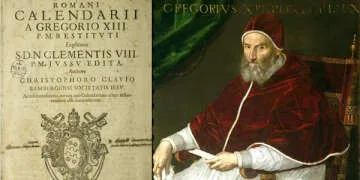
The Shift to the Gregorian Calendar in France
The Historical Context of the Gregorian Calendar
The Gregorian Calendar was introduced by Pope Gregory XIII in 1582 as a reform of the Julian Calendar, which had inconsistencies that caused the date of the equinox to drift. France adopted this new calendar in the same year, making a monumental shift in how time was measured in the Western world.
Julius Caesar and the Julian Calendar
The origins of the calendar reform can be traced back to Julius Caesar, who instituted the Julian Calendar in 46 BC. While it was a significant advancement for its time, errors accumulated over centuries, leading to a drift in calendar dates. The Gregorian reform aimed to correct these errors by introducing a more accurate system.
The Implementation of the Gregorian Calendar in France
France's Adoption of the New Calendar
France was one of the first countries to adopt the Gregorian Calendar. The transition began on October 15, 1582, when the day following October 4, 1582, was declared October 15. This swift change was crucial for aligning the calendar with the solar year.
The Impact of the Change on Daily Life
The adoption of the Gregorian Calendar significantly influenced life in France, affecting everything from religious holidays to agricultural seasons. Although the change faced resistance from some quarters, it ultimately spread across Europe and became the standard in most of the Western world.
Fun Fact
The Inaccuracy of the Julian Calendar
Did you know that the Julian Calendar was off by about 11 minutes per year? This small discrepancy led to a drift of approximately one day every 128 years, necessitating the reform that led to the Gregorian Calendar.
Additional Resources
Recommended Reading on the Gregorian Calendar
For more on this topic, you may explore Cultural History of the Calendar by Jeremy Black and The Time Book: A Historical Introduction to Timekeeping by Angeliki C. Tsoukala. Both texts offer deep insights into the evolution of timekeeping practices across civilizations.













 Continue with Google