


The Six-Day War Overview
The Six-Day War, fought in June 1967, marked a significant turning point in Middle Eastern history. It involved a rapid and decisive conflict between Israel and the neighboring Arab nations of Syria, Jordan, Iraq, and Egypt. Spanning just six days, the conflict dramatically reshaped the geopolitical landscape of the region.
On June 5, 1967, tensions escalated as Israel launched a preemptive strike against Egypt, following weeks of military buildups along its borders. In the ensuing days, Israel swiftly defeated the armies of its Arab neighbors, gaining control over the West Bank, the Golan Heights, the Gaza Strip, and the Sinai Peninsula. The war concluded with a UN-brokered ceasefire on June 10, 1967, bringing an end to hostilities.
Uniqueness of the 1967 Six-Day War
The 1967 Six-Day War was characterized by its rapid military engagements, with Israel's strategy exploiting the element of surprise effectively. Israel's air force achieved air superiority within hours, which allowed ground troops to advance swiftly against the overwhelmed forces of Jordan, Syria, and Egypt.
The Role of the UN in Ceasefire
After the war's conclusion, the United Nations played a crucial role in establishing a ceasefire and facilitating the withdrawal of troops. The UN’s peacekeeping efforts were critical to mitigating further conflict and initiating a process towards long-term peace negotiations.
Consequences of the Conflict
The aftermath of the Six-Day War had far-reaching implications. Israel’s territorial gains altered the dynamics of power in the region and instigated ongoing disputes that are still relevant today. The war also led to a significant influx of Palestinians into neighboring countries, exacerbating regional tensions.
Impact on Arab Nations
The defeat in the Six-Day War ignited widespread national introspection throughout Arab nations. It challenged political leadership structures and led to reforms in military strategies, ultimately influencing the subsequent Arab-Israeli conflicts.
Israel's Position in the Region
In the wake of its military successes, Israel solidified its influence, though it also faced heightened hostility from its Arab neighbors. The war set the stage for future confrontations, peace negotiations, and the complex interplay of international diplomacy in the region.
Fun Fact
An Unforgettable Military Strategy
One fascinating aspect of the Six-Day War is how effective Israel's use of intelligence and swift maneuvering was. Israeli forces achieved numerous decisive victories by utilizing a mix of strategy, speed, and surprise tactics, making it one of the most remarkable campaigns in military history.
Additional Resources
Recommended Reading on the Six-Day War
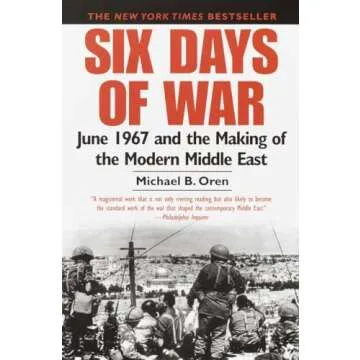
For those interested in learning more about the Six-Day War, consider reading "The Six-Day War: The Breaking of the Middle East" by Guy Laron and "1967: Israel, the War, and the Year That Transformed the Middle East" by Tom Segev. These works provide in-depth analyses of the conflict and its implications, offering valuable perspectives on this crucial period in history.











 Continue with Google