


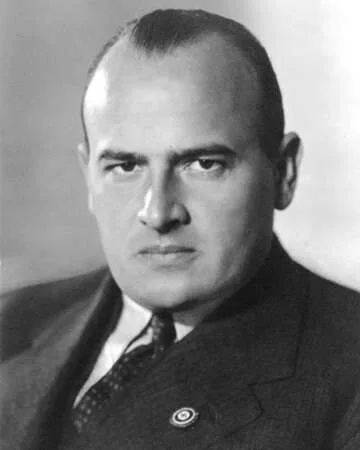
Who Was Hans Frank?
Hans Frank, born in Karlsruhe, Baden, German Empire in 1900, is a significant yet controversial figure in history primarily due to his role as a high-ranking Nazi official during World War II. As the Governor-General of occupied Poland, Frank was responsible for implementing harsh policies that led to widespread suffering and atrocities against the Polish population, including Jewish communities. His tenure in Poland marked a tragic chapter in the Holocaust, where millions lost their lives due to the systematic genocidal measures he enforced.
Early Life of Hans Frank
Frank grew up in a middle-class family and engaged with nationalist ideologies from a young age. After studying law, he joined the Nazi Party in 1923, quickly rising through the ranks to become a prominent lawyer for the party. His legal expertise and fervent dedication to Nazi ideologies paved the way for his future positions, culminating in his appointment as the Governor-General of the occupied territories.
Hans Frank's Role in Nazi Policies
As the Governor-General of Poland from 1939 to 1945, he oversaw the administration of a regime that systematically oppressed and exterminated the Polish population. Frank's policies inflicted severe restrictions on the Polish people and contributed to the brutal realities of the Holocaust. He was a key figure in facilitating the ghettoization and deportation of Jews, leading to mass executions and suffering.
The Fall of Hans Frank and His Legacy
With the downfall of the Nazi regime in 1945, Frank was captured and tried at the Nuremberg Trials. His defense hinged on claims of following orders, yet the court found him guilty of war crimes and crimes against humanity, leading to his execution in 1946. Frank's life serves as a stark reminder of the consequences of unchecked power and the devastating impact of hate-driven policies.
Impact of Hans Frank's Actions
The actions taken by Hans Frank as Governor-General have left a lasting scar in the history of Poland and the Jewish people. His legacy is one of cruelty and fanaticism, embodying the extreme consequences of ideologies that prioritize hatred and division.
Aftermath and Reflection
Post-execution, the memory of Frank's atrocities continues to serve as a critical lesson against authoritarianism and prejudice in contemporary discussions about human rights. Understanding his legacy and the horrors of his rule is essential in ensuring such events never occur again.
Fun Fact
The Dual Life of Hans Frank
Interestingly, while Hans Frank was responsible for the brutal policies in Poland, he maintained a facade of a cultured persona, often engaging in discussions about art and literature, showcasing the chilling duality of his character.
Additional Resources
Recommended Reading on Hans Frank
For those interested in delving deeper into the life and impact of Hans Frank, consider reading “The Holocaust: A New History” by Laurence Rees and “Nazi Germany: A New History” by Klaus P. Fischer. These works provide comprehensive insights into the era, the war crimes committed, and the roles of various figures like Frank in the larger context of the Holocaust.










 Continue with Google