


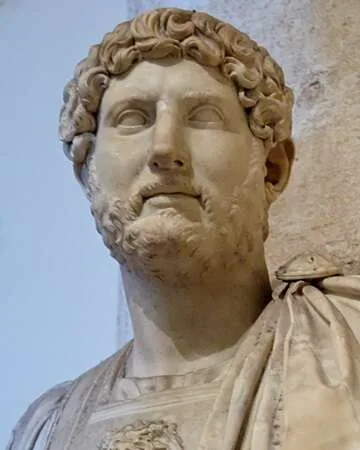
The Life and Times of Hadrian
Emperor Hadrian, born in Italica in 76 AD, is one of the most renowned Roman emperors, ruling from 117 to 138 AD. Known for his philosophical approach to leadership, Hadrian’s reign marked significant advancements in Roman architecture and engineering, which profoundly influenced the Empire's future. One of his most significant contributions was the construction of Hadrian's Wall, a defensive fortification in Britain, symbolizing the Roman Empire's northern limit and its military might.
Hadrian's Vision of Rome
Hadrian was not just a ruler but a visionary leader who sought to consolidate and protect the vast territories of the Roman Empire. His decision to build Hadrian's Wall in the early 120s AD was a strategic measure to secure the Roman frontier against the tribes of Scotland and to control immigration and smuggling across the border. This wall not only served military purposes but also demonstrated Hadrian’s commitment to strengthening and unifying the empire.
Architectural Innovations Under Hadrian
Under Hadrian's rule, architecture flourished. His influence can be seen in the Pantheon in Rome, renowned for its large dome and oculus, which remained the largest in the world for over 1300 years. Hadrian's architectural legacy emphasizes the importance of beauty and functionality, integrating innovative designs with Roman engineering techniques.
Hadrian's Cultural Impact and Legacy
Hadrian’s love for Greek culture greatly influenced Roman art, philosophy, and architecture. His reign is often marked by a flourishing of the arts and a more cosmopolitan worldview among the Roman elite, thanks to his fascination with Greek culture and philosophy. He enhanced various cities with theaters and temples, fostering a cultural exchange that enriched the empire.
Hadrian’s Political Strategies
Hadrian's diplomatic strategies were also noteworthy. He preferred to use negotiation instead of military confrontation, establishing peace with many neighboring regions. His travels throughout the Empire forged strong relationships with local communities, essentially reshaping the perception of Roman authority from that of conqueror to benevolent ruler.
The Enduring Influence of Hadrian
Even years after his passing in 138 AD, Hadrian’s influence is evident in modern times. His wall remains a historical landmark, attracting countless visitors who marvel at the engineering prowess of ancient Rome. Hadrian's architectural and cultural contributions continue to be studied, highlighting the lasting impact of his reign on Western civilization.
Fun Fact
Hadrian’s Travels
Hadrian was one of the first emperors to travel extensively throughout his empire, reportedly visiting almost every province. His journeys aimed to understand and connect with the diverse cultures under Roman rule, which was quite progressive for his time.
Additional Resources
Recommended Reading on Hadrian
For those interested in learning more about Hadrian and his impact, consider reading "Hadrian and the Triumph of Rome" by Anthony Everitt. This book provides an engaging narrative of Hadrian's life and the broader implications of his reign.






 Continue with Google