


The Prelude to a New Era: The Norman Invasion
The Norman Invasion of England in 1066 marks a pivotal moment in British history. Spearheaded by William the Conqueror, Duke of Normandy, this event not only changed the course of England but also shaped the cultural and political future of the nation. Following the death of Edward the Confessor, England was plunged into a succession crisis, with various contenders vying for the throne. William, having claimed that Edward had promised him the throne, made the bold decision to invade.
William the Conqueror: The Ambitious Duke
Born in 1028 in Falaise, Normandy, William was the illegitimate son of Robert I, Duke of Normandy. His rise to power was marked by strength, shrewdness, and the ability to forge strategic alliances. His claim to the English throne was not just political but also personal, believing it was his destiny to rule. William's ambition and military experience set the stage for his historic conquest.
The Launch of the Invasion
In September 1066, William assembled a fleet of around 700 ships and thousands of troops, comprising knights, foot soldiers, and archers. Crossing the English Channel, they landed at Pevensey on September 28. This audacious move sparked a series of battles that would change England forever, culminating in the fateful encounter at Hastings.
The Battle for England: The Siege of Hastings
One of the most significant aspects of the Norman Invasion is the Battle of Hastings, fought on October 14, 1066. The vastly outnumbered Anglo-Saxon forces, led by Harold Godwinson, faced off against the seasoned troops of William. Despite their valiant efforts, the tactics and coordination of the Norman forces proved superior, leading to a decisive victory for William.
The Fall of King Harold
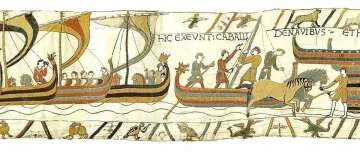
The battle saw the somber death of King Harold, a critical moment as his leadership was essential for the defense against the Normans. His notorious last stand is immortalized in the Bayeux Tapestry, which illustrates the events leading to the battle and Harold's grim fate, solidifying its place in history.
Aftermath and the Beginning of Norman England
Following his victory, William was crowned King of England on Christmas Day 1066, marking the beginning of a new Norman dynasty. The invasion fundamentally transformed English society, leading to major shifts in land ownership, governance, and cultural influences that resonate through the centuries.
Fun Fact
Did You Know? The Legacy of the Bayeux Tapestry
The Bayeux Tapestry is not just a remarkable piece of art but also a detailed historical document depicting the events leading up to the Norman Conquest. Measuring about 230 feet long, it tells the story of William's claim to the throne and the events of the invasion in vivid detail.
Additional Resources
Recommended Reading on the Norman Invasion of England
For those interested in further exploration, consider reading The Norman Conquest: The Battle of Hastings by Donald Matthew or The Bayeux Tapestry: A New History by Caroline Goodson. These works provide deeper insights into the events and their implications for England and Europe as a whole.











 Continue with Google