


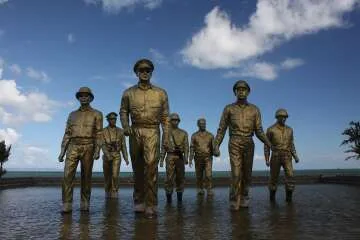
The Momentous Occasion of US Forces' Return
Douglas MacArthur’s Promise to the Philippines
In a historic moment on October 20, 1944, General Douglas MacArthur fulfilled his promise to the Filipino people by leading a massive assault on Leyte Island, marking the return of the US military to the Philippines. Having famously declared, "I shall return" after retreating from the islands in 1942, MacArthur's return was not just a military maneuver but a symbol of hope for a nation devastated by war.
The Strategic Importance of Leyte
The landing at Leyte was a crucial part of the Allies' plan to regain control over the Philippines and significantly weaken Japanese forces in the region. The successful landing involved the US 6th Army, which faced fierce resistance from Japanese troops. The geographical significance of Leyte served both as a base for further operations and a stepping stone towards liberating Luzon, the Philippines' main island.
The Battle and its Consequences
Key Engagements: The Battle of Leyte
The initial landings on Leyte sparked the Battle of Leyte, one of the largest naval battles in history. As US forces landed, they encountered fierce fighting from entrenched Japanese soldiers, who were determined to repel the invaders. Over the course of several weeks, both sides engaged in brutal combat, with the Allies ultimately securing a strategic victory.
The Aftermath of the Return
The successful landing and subsequent battles on Leyte set the stage for the broader liberation of the Philippines. MacArthur's return inspired not only the American forces but also the Filipino people, whom he called his brothers and sisters. This moment significantly boosted morale and solidified the resolve of both military personnel and civilians in the fight against Japanese occupation.
Fun Fact
Douglas MacArthur’s Cult of Personality
General MacArthur became a larger-than-life figure, with his charismatic leadership style and dramatic proclamations capturing public imagination. His famous quote, "I shall return" became a rallying cry and is still recognized today as a symbol of hope and determination.
Additional Resources
Recommended Reading on Douglas MacArthur
To delve deeper into the life and legacy of General MacArthur, consider reading “American Caesar: Douglas MacArthur 1880-1964” by William Manchester or “MacArthur: His Rendezvous with History” by S. L. A. Marshall. These works provide extensive insights into his military strategies and personal philosophies during pivotal moments in history.









 Continue with Google