


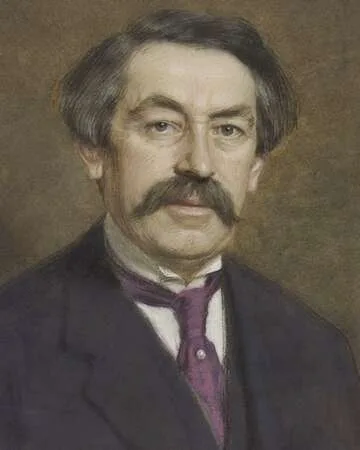
The Concept of a United States of Europe
In the year 1929, a pivotal moment for European unity unfolded when French Premier Aristide Briand proposed the creation of a United States of Europe. This revolutionary idea aimed to foster peace and cooperation between European nations that had long been marred by conflict, especially after the devastation of World War I. Briand's vision was to transcend national borders and establish a federation that would strengthen economic ties and political collaboration.
Aristide Briand and His Vision
Aristide Briand, a leading statesman and proponent of international cooperation, imagined this federation not merely as a political entity but as a means to promote peace and prevent future wars in Europe. He believed that by forming a close-knit alliance, nations could dialogue and resolve conflicts amicably. Briand delivered his proposal at the League of Nations, where he emphasized that unity was essential for the continent's recovery and stability.
The Context of Post-War Europe
The context of the late 1920s was critical, as many European nations grappled with the aftereffects of World War I. Economic hardship, territorial disputes, and a fractured political landscape created ripe conditions for Briand's proposal. By advocating for a United States of Europe, he aimed to secure lasting peace through collaboration and shared governance, setting the groundwork for future European integration.
Challenges to European Unity
While Briand's vision was ambitious, it faced considerable challenges. Nationalistic sentiments and differing political ideologies often hindered the acceptance of such a proposal. Many countries were still reeling from the socio-economic fallout of the Great War, making them hesitant to relinquish any degree of autonomy. Briand's proposal, though aspirational, revealed the complexities involved in attempts to unify Europe.
Reactions to the Proposal
Briand's call for a United States of Europe elicited varied responses. Some leaders and intellectuals championed the ideal of unity, seeing it as a pathway to a more stable and prosperous Europe. However, others were skeptical, fearing that it would dilute national sovereignty. This dichotomy of opinions laid the groundwork for future discussions regarding European integration.
Legacy of the Idea
Briand's proposal, though it didn’t materialize in the form he envisioned, laid the intellectual foundation for future initiatives, including the formation of the European Union. His advocacy for cooperation and unity continued to resonate, influencing generations of politicians and thinkers advocating for a more integrated Europe.
Fun Fact
Aristide Briand’s Vision Continues Today
Interestingly, Aristide Briand is often regarded as one of the architects of European integration, and his proposal for a United States of Europe is seen as a precursor to the modern-day European Union. His ideals continue to inspire discussions about unity and collaboration in Europe today.
Additional Resources
Recommended Reading on Aristide Briand
For those interested in exploring deeper into the life of Aristide Briand and his influence, consider reading "A History of Europe 1890-1945" by Eric J. Hobsbawm and "The History of European Integration" by Milica Zarkovic. These books provide insight into the historical context surrounding Briand's proposals and the evolution of European unity.













 Continue with Google