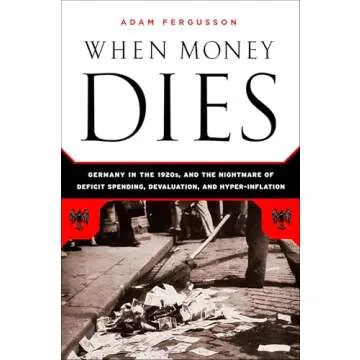
Delve into the intriguing pages of When Money Dies: The
Nightmare of the Weimar Hyperinflation, authored by the
insightful Adam Fergusson. This remarkable book takes readers on a
profound journey through one of the most perilous financial crises
in history, the hyperinflation that incapacitated Germany following
the First World War. With its expert blend of historical
context, economic theory, and
personal anecdotes, Fergusson vividly
captures...
Show more Delve into the intriguing pages of When Money Dies: The Nightmare of the Weimar Hyperinflation, authored by the insightful Adam Fergusson. This remarkable book takes readers on a profound journey through one of the most perilous financial crises in history, the hyperinflation that incapacitated Germany following the First World War. With its expert blend of historical context, economic theory, and personal anecdotes, Fergusson vividly captures the tumultuous events that led to the collapse of the German Mark and the spiraling chaos that ensued.
Fergusson's narrative is anchored in extensive research, utilizing firsthand accounts and a multitude of sources to bring to life the despair of ordinary citizens caught in the storm of economic collapse. As readers turn the pages, they will discover how the failures of monetary policies not only eroded savings but also tore at the social fabric of a nation. This account is more than a history lesson; it provides a stark warning to contemporary policymakers about the fragility of economic systems.
The book deftly contextualizes the Weimar hyperinflation within a broader political and economic landscape, examining the contribution of war reparations, political instability, and reckless fiscal decisions. Fergusson’s ability to weave together these complex elements makes this work both insightful and accessible, ensuring that readers grasp the magnitude of the events.
Notably, When Money Dies serves as a crucial reminder of the dangers of unchecked inflation and the repercussions that follow. It compels readers to reflect on current economic practices and the potential perils that lie ahead if lessons from the past are ignored. This engaging, informative book is a must-read for history enthusiasts, economic scholars, and anyone interested in understanding the lessons of, and warnings presented by, historical economic failures.
Less













 Continue with Google