



Best Budget Smartwatches in 2026: Top Picks Under $100
Disclosure: This article contains affiliate links. If you buy through these links, we may earn a commission at no extra cost to you.
Choosing a budget smartwatch in 2026 isn’t about chasing the longest spec list—it’s about avoiding the usual disappointments: unreliable GPS, laggy menus, dim displays outdoors, and “smart” features that only work with one phone brand. The good news: today’s best affordable smartwatches deliver real value—solid health tracking, strong battery life, and dependable notifications—without premium pricing.
Below are 10 curated picks mapped to the exact searches people use (under $100/$150/$200, Android vs iPhone, GPS, running, students). Prices change constantly, so treat the “under $X” buckets as typical street price targets, especially during sales.
Quick Picks (Choose in 30 seconds)
- Under $100: Amazfit Bip 6 (bright AMOLED + long battery)
- Under $150: Fitbit Versa 4 (balanced fitness + simple daily use; often discounted)
- Under $200: Samsung Galaxy Watch7 (best “full smartwatch” experience when on sale)
- Best budget for Android: CMF by Nothing Watch 3 Pro (excellent value + dual-band GPS)
- Best budget for iPhone: Apple Watch SE (3rd Gen) (tightest iPhone integration)
- Best budget GPS: HUAWEI Watch Fit 4 (multi-band GNSS + strong battery targets)
- Best budget fitness: Amazfit Active 2 (fitness-first features + strong battery)
- Best budget Wear OS: OnePlus Watch 2 (Wear OS + standout battery; Android only)
- Best for running: Garmin Forerunner 55 (training guidance + simplicity)
- Best for students: Xiaomi Redmi Watch 5 (big screen + long battery + calls)
How we chose (what matters on a budget)
To keep this list practical and buyer-friendly, every pick earns its spot based on the things that actually impact daily satisfaction:
- Phone compatibility: iPhone users usually get the best experience with Apple Watch; Android users get the most features from Wear OS and Android-first watches.
- Battery reality: “up to” claims vary, so we prioritize models with strong published baselines and realistic usage modes.
- Outdoor readability: AMOLED helps, but brightness and UI matter more than marketing.
- GPS and fitness reliability: especially for walking/running routes, pacing, and consistency.
- Comfort and durability: water resistance, strap comfort, and daily wear.
Best Budget Smartwatches in 2026: 10 Affordable Picks Under $100
Best Smartwatch Under $100: Amazfit Bip 6
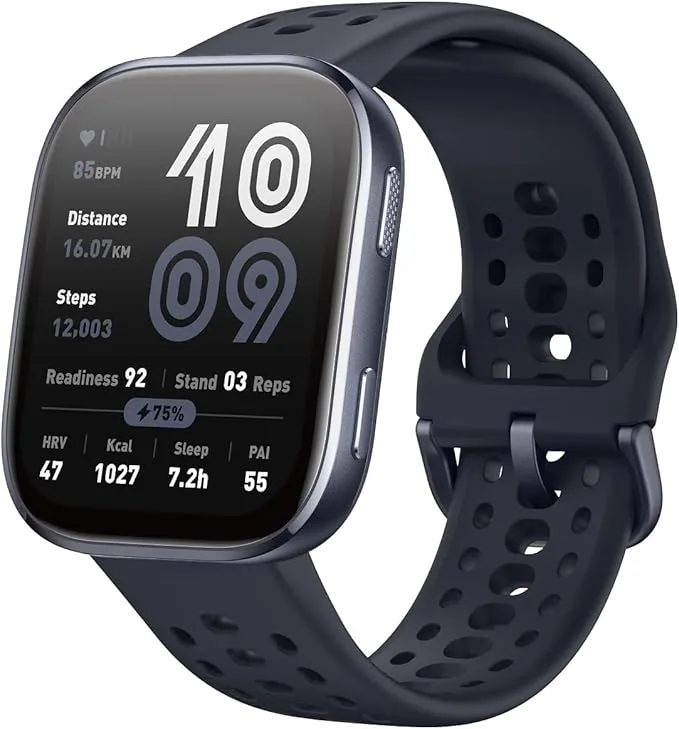
If your goal is maximum value per euro/dollar, the Bip 6 is one of the easiest recommendations in 2026. It pairs a large 1.97" AMOLED with up to 2,000 nits peak brightness, and it targets up to 14 days of typical battery life.
Best for: everyday health tracking,
notifications, casual workouts, and anyone who hates charging
daily.
Why it wins (feature/spec keywords):
- 1.97" AMOLED with up to 2,000 nits peak brightness for outdoor readability
- Built-in GPS (5 satellite positioning systems) + offline maps / turn-by-turn
- 5 ATM water resistance + Bluetooth calling at an entry-level price
Key specs:
- Display: 1.97" AMOLED
- Water rating: 5 ATM
- GPS: Built-in (5 satellite systems)
- Calling: Bluetooth calls (mic + speaker)
| Trade-offs | Not a full app ecosystem like Wear OS/watchOS; advanced features depend on Zepp app ecosystem. |
| Compatibility | Android + iOS via Zepp app (minimum OS varies by region; product page lists supported devices). |
| Battery (realistic range) | ~6–14 days depending on usage; up to 26 days in battery saver; GPS continuous usage figure is listed separately. |
Check price | See alternatives
Best Smartwatch Under $150: Fitbit Versa 4
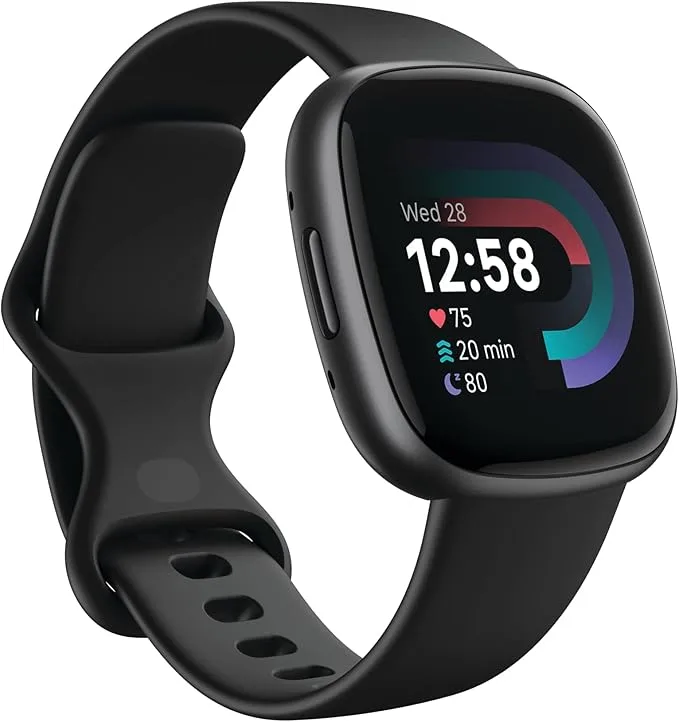
The Versa 4 remains a strong “set-and-forget” fitness smartwatch: clean UI, good health basics, and features that feel mature. Google’s store highlights built-in GPS and battery life over 6 days, plus fast top-ups (a short charge can restore meaningful daily runtime).
Best for: balanced fitness + daily wear, users who want simplicity over “app overload.”
Why it wins (feature/spec keywords):
- Built-in GPS + GLONASS for phone-free outdoor workouts
- 6+ day battery positioning (strong for a mainstream fitness smartwatch)
- 50m water resistance + onboard speaker/mic for a more “smartwatch-like” feel
Key specs:
- Display: AMOLED
- Water rating: 50m
- GPS: Built-in (GPS + GLONASS)
- Calling: Speaker + microphone (on-wrist audio available)
| Trade-offs | App ecosystem is more limited than Wear OS; some coaching/insights may be gated behind Fitbit features/subscriptions depending on region. |
| Compatibility | Android + iPhone via Fitbit app. |
| Battery (realistic range) | ~4–6+ days depending on GPS frequency, screen settings, and notifications. |
Check price | See
alternatives
Best Smartwatch Under $200: Samsung Galaxy Watch7
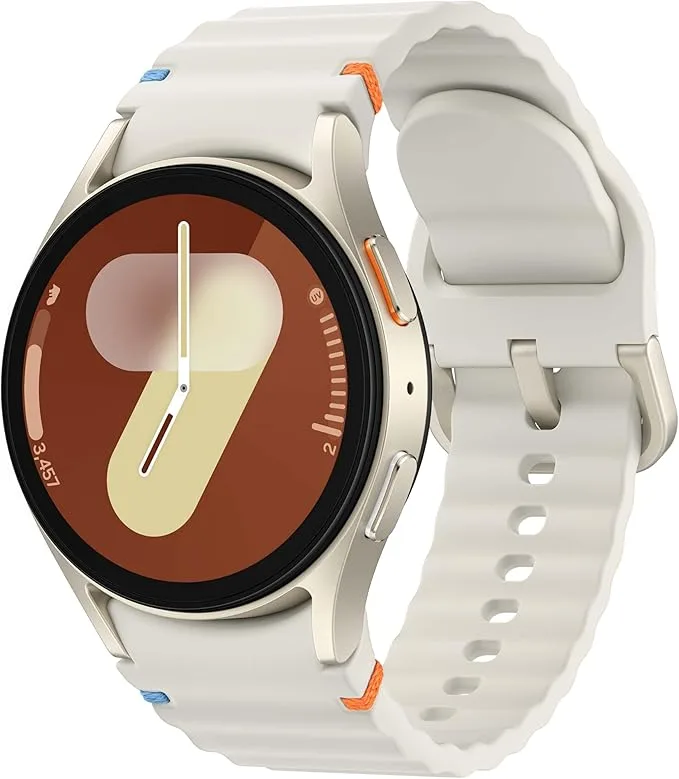
When the Galaxy Watch7 drops into the sub-$200/€200 range during promotions, it becomes one of the best full-feature buys. Samsung positions it with a 3nm processor and highlights Dual-Frequency GPS (L1+L5) for improved tracking consistency.
For price reality, idealo Germany shows Watch7 listings starting well below €200 depending on size/variant.
Best for: Android users who want premium
smartwatch feel (notifications, health, apps) without paying
flagship price.
Why it wins (feature/spec keywords):
- Dual-GPS (L1+L5) positioning for improved tracking consistency
- Wear OS experience with strong “smart” features (notifications, apps, voice, etc.)
- 5 ATM + IP68 durability class (good for daily wear and swimming scenarios)
Key specs:
- Display: 1.3" (40mm) / 1.5" (44mm)
- Water rating: 5 ATM + IP68
- GPS: Dual-GPS (L1+L5)
- Calling: Yes (Bluetooth calling; LTE on specific variants)
| Trade-offs | Best experience often requires Android (and some features are strongest on Samsung phones); battery is typically “every 1–2 days” in real usage. |
| Compatibility | Android (Wear OS / Samsung ecosystem). |
| Battery (realistic range) | ~1–2 days typical depending on AOD, workouts, and GPS use. |
Check price | See alternatives
Budget Smartwatch for Android 2026: CMF by Nothing Watch 3 Pro
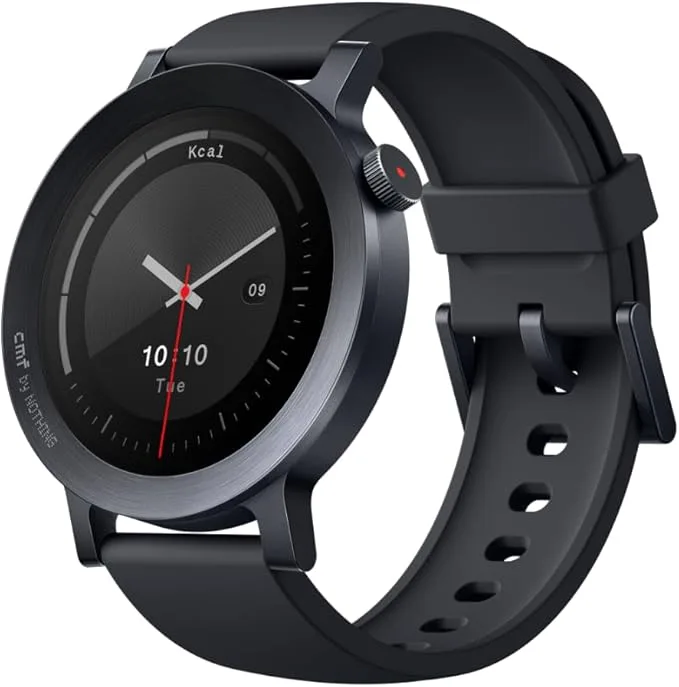
CMF’s Watch 3 Pro is built for value: a 1.43" AMOLED, dual-band GPS, and a stated 13-day battery life, at a price that often undercuts mainstream brands.
Best for: Android users who want strong basics
(GPS + screen + battery) without Wear OS pricing.
Why it wins (feature/spec keywords):
- 1.43" AMOLED + dual-band GPS at a budget price point
- 13-day battery life positioning for high “set-and-forget” value
- Uses Nothing X app + supports common health integrations (varies by phone/region)
Key specs:
- Display: 1.43" AMOLED
- Water rating: IP68
- GPS: Built-in dual-band
- Calling: Calls supported
| Trade-offs | IP68 guidance on official page warns against pool/shower/high-pressure water use; not a Wear OS app ecosystem. |
| Compatibility | Android + iOS via Nothing X app (some integrations require newer Android versions). |
| Battery (realistic range) | ~4–13 days depending on always-on display and tracking intensity. |
Check price | See alternatives
Budget Smartwatch for iPhone 2026: Apple Watch SE (3rd Gen)
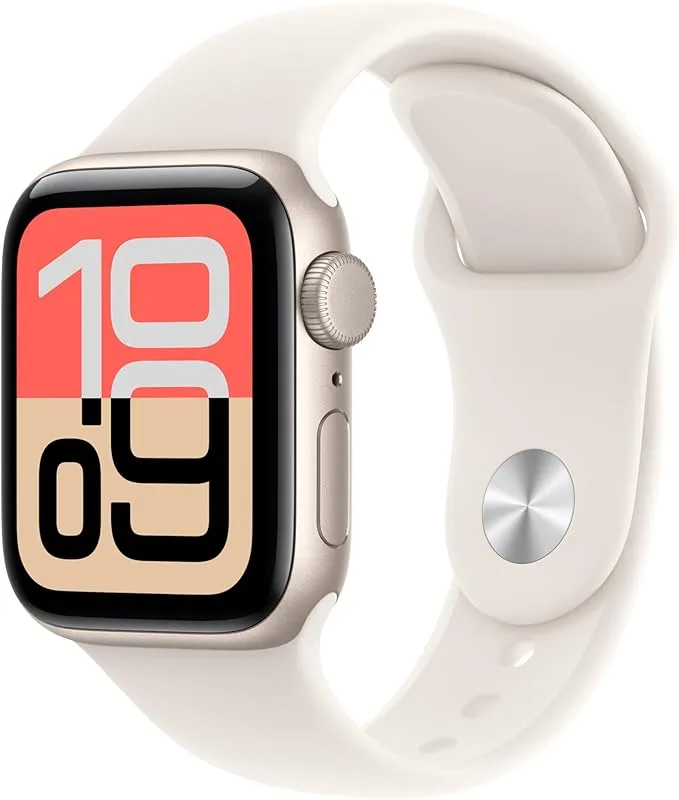
For iPhone users, the Apple Watch SE is still the cleanest “it just works” choice—especially the SE 3, which Apple announced with an Always-On display, fast charging, and 18-hour battery life, plus the S10 chip and expanded health features.
Best for: iPhone owners who want reliable notifications, Apple ecosystem fit, and strong day-to-day polish.
Why it wins (feature/spec keywords):
- Best-in-class iPhone integration (calls, messages, ecosystem features)
- Always-On Retina display + fast charging capability
- Strong everyday usability with a refined watchOS experience
Key specs:
- Display: Always-On Retina (OLED/LTPO)
- Water rating: 50m
- GPS: GPS model / GPS + Cellular model
- Calling: Yes (speaker/mic; cellular optional by model)
| Trade-offs | Typically a daily charger; best value is often during sales/refurb pricing. |
| Compatibility | iPhone-only (Apple specifies iPhone requirements in support documentation). |
| Battery (realistic range) | ~1 day typical (Apple states up to 18 hours normal use; longer in Low Power Mode). |
Check price | See alternatives
Best Budget Smartwatch with GPS 2026: Amazfit Active 2
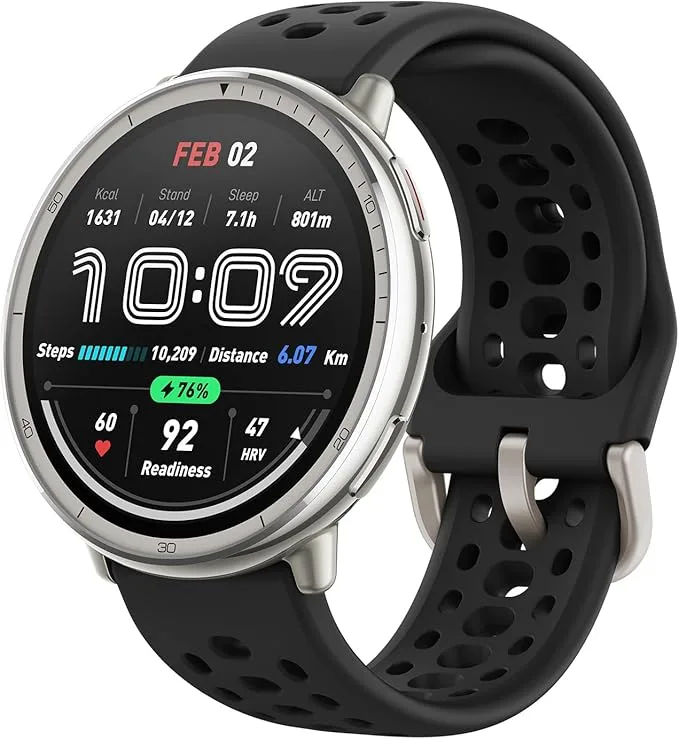
The Active 2 is positioned clearly as a fitness-first watch. Amazfit’s listing highlights a 1.75" AMOLED, an “up to 10 days” battery target, and 160+ workout modes, and its product specs include 5 ATM water resistance.
Best for: gym routines, daily activity tracking,
and users who want “fitness value” more than smartwatch
apps.
Why it wins (feature/spec keywords):
- Offline maps + GPS turn-by-turn for fitness navigation on a budget
- 5 ATM water rating + Bluetooth calling/texts supported
- Battery profiles are clearly defined for typical / heavy / saver usage
Key specs:
Display: 1.32" (Round model page)
Water rating: 5 ATM
GPS: Built-in (5 satellite systems)
Calling: Bluetooth calls (mic + speaker)
| Trade-offs | Not Wear OS; some phone-assistance features are platform-specific (e.g., camera control iOS-only). |
| Compatibility | Android + iOS via Zepp app. |
| Battery (realistic range) | ~5–10 days typical/heavy; up to 19 days in saver; GPS continuous usage listed separately. |
Check price | See alternatives
Best Budget Fitness Smartwatch 2026: Fitbit Versa 4
Best Budget Wear OS Smartwatch 2026: OnePlus Watch 2
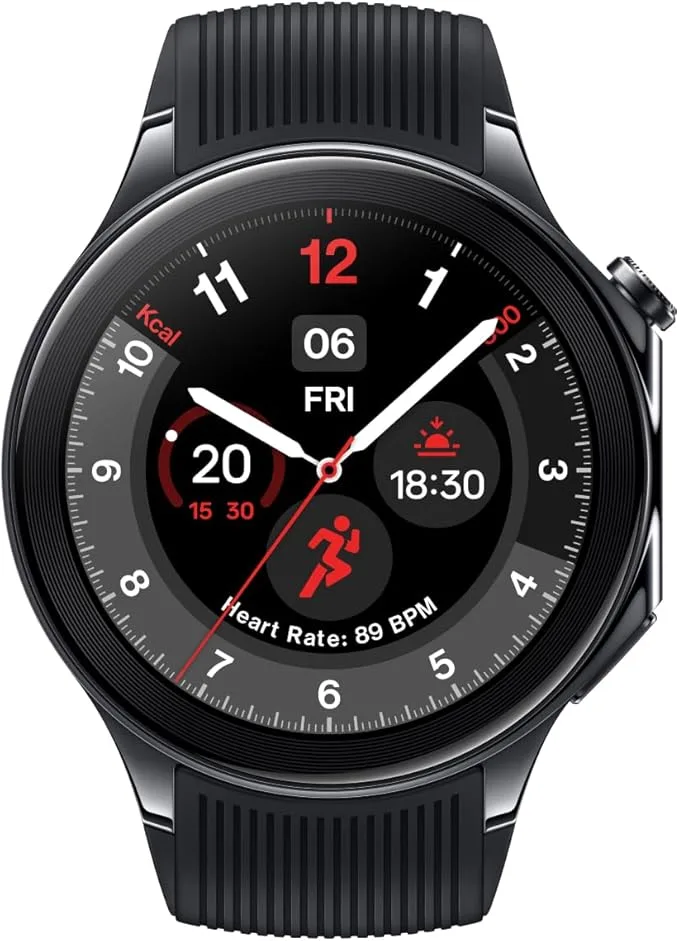
If you want Google apps and a modern smartwatch platform, Wear OS is the path—but battery is often the pain point. OnePlus tackles that directly: it lists Wear OS 4 + RTOS, up to 100 hours in Smart Mode, and dual-frequency GPS (L1+L5).
The big caveat is important: OnePlus states it only supports Android (not iOS).
Best for: Android users who want Wear OS apps
(Maps/Wallet, etc.) but hate daily charging.
Why it wins (feature/spec keywords):
- Wear OS 4 + RTOS “dual engine” approach aimed at better battery than typical Wear OS watches
- Dual-frequency GPS (L1+L5) + Bluetooth calling
- Strong durability class listing (MIL-STD-810H; 5ATM; IP68)
Key specs:
- Display: 1.43" AMOLED
- Water rating: 5ATM + IP68
- GPS: Dual-frequency L1+L5
- Calling: Bluetooth calling
| Trade-offs | Android-only; heavy usage (AOD, third-party faces, lots of GPS) shortens battery meaningfully. |
| Compatibility | Android 8.0+ (and GMS requirement noted in official specs). |
| Battery (realistic range) | ~2–4 days typical for many users; official modes list up to 100h Smart Mode, 48h heavy, 12 days saver. |
Check price | See alternatives
Budget Smartwatch for Running 2026: Garmin Forerunner 55
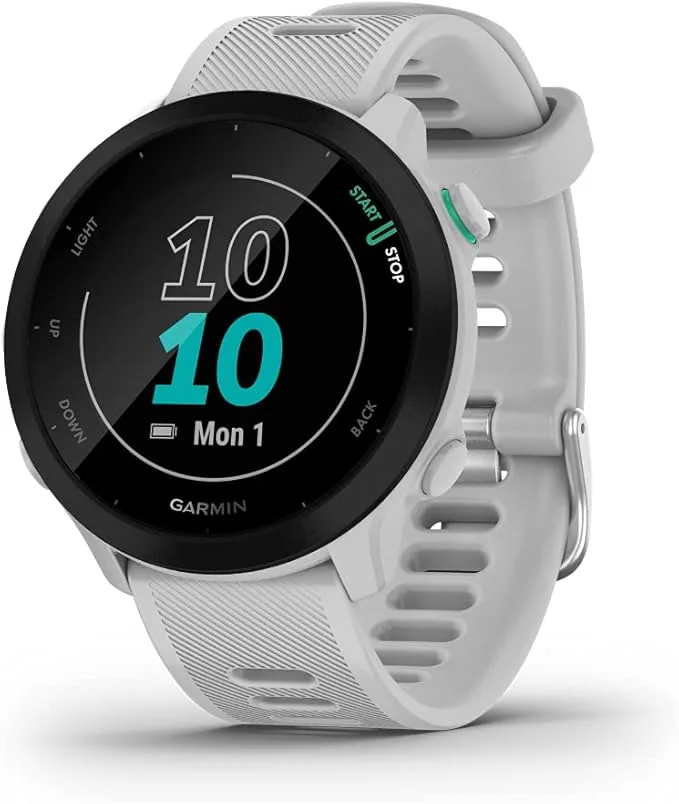
For runners, the “best budget” choice often isn’t the most feature-packed smartwatch—it’s the watch that makes training easier and tracking consistent. Garmin positions the Forerunner 55 as an easy-to-use running smartwatch with pace/distance tracking, personalized training guidance, and battery life up to 2 weeks.
Best for: beginners to intermediate runners,
training plans, and set-it-and-run simplicity.
Why it wins (feature/spec keywords):
- Running-first experience with pace/distance tracking + training guidance
- Strong battery positioning: up to 14 days smartwatch mode, up to 20 hours GPS mode
- 5 ATM swim rating (good for rain, sweat, pool)
Key specs:
- Display: MIP (Garmin running watch style)
- Water rating: 5 ATM
- GPS: Built-in
- Calling: No on-wrist calls (notifications + control only)
| Trade-offs | Not designed as an “apps-first” smartwatch; prioritizes training and reliability over fancy UI/app stores. |
| Compatibility | Android + iPhone via Garmin Connect ecosystem. |
| Battery (realistic range) | ~7–14 days depending on training volume; GPS mode rated up to 20 hours. |
Check price | See alternatives
Budget Smartwatch for Students 2026: Xiaomi Redmi Watch 5
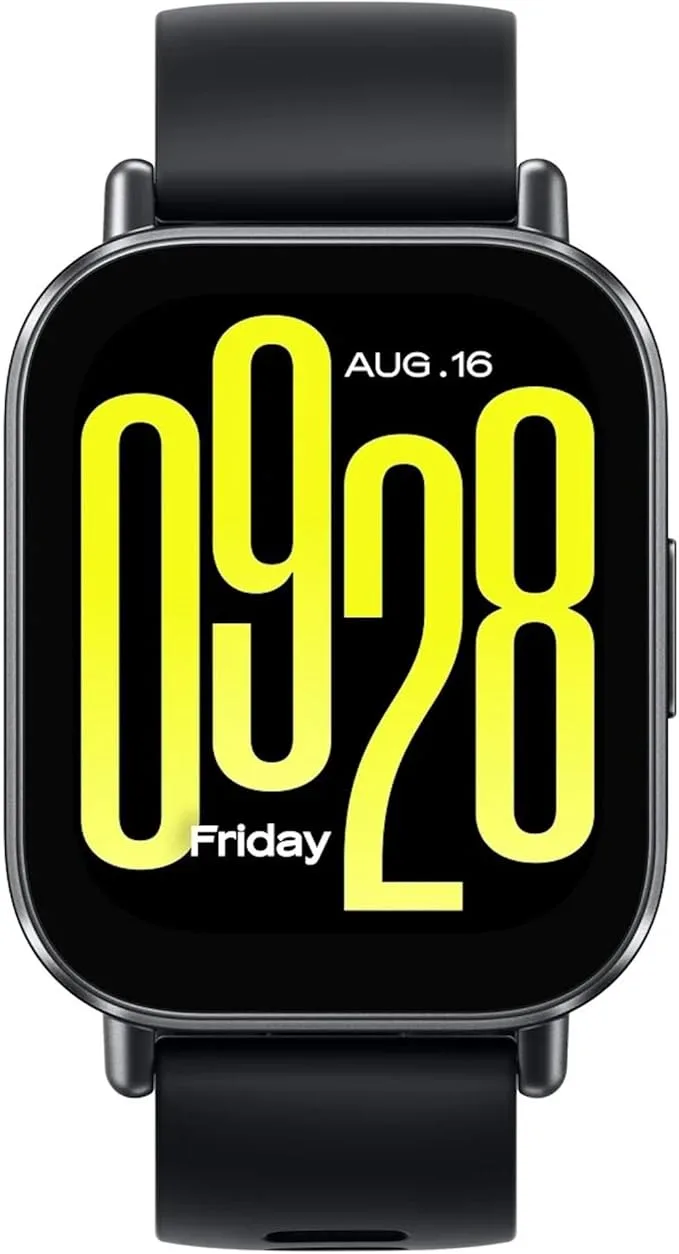
Students typically need three things: battery that lasts through busy weeks, a screen that’s easy to read in class/outdoors, and practical features like calls and alarms. Xiaomi’s Redmi Watch 5 highlights a 2.07" AMOLED, up to 24 days battery life, built-in 5-system GNSS, and Bluetooth phone calls.
Best for: students who want maximum battery + a big display on a tight budget.
Why it wins (feature/spec keywords):
- Big, sharp 2.07" AMOLED + HBM 1500 nits for easy reading
- 24-day typical battery positioning (great for busy schedules)
- Built-in GNSS + Bluetooth calling (speaker + dual mics)
Key specs:
- Display: 2.07" AMOLED
- Water rating: 5 ATM
- GPS: GNSS (GPS/Galileo/GLONASS/BeiDou/QZSS)
- Calling: Bluetooth calling supported
| Trade-offs | Not Wear OS/watchOS; fewer third-party apps and “smart” extras than premium platforms. |
| Compatibility | Android 8.0+ / iOS 12.0+ (per official specs). |
| Battery (realistic range) | ~12–24 days depending on brightness, AOD/raise-to-wake, and workout/GNSS frequency. |
Check price | See alternatives
Buyer Guide: How to Pick the Right Budget Smartwatch
1) Start with your phone.
- iPhone: Apple Watch SE is the safest choice for features and reliability.
- Android: choose between Wear OS (OnePlus Watch 2 / Galaxy Watch7) or a lightweight OS (CMF, Amazfit, Xiaomi).
2) Decide what “GPS” means for you.
If you run/walk outdoors often, prioritize models listing
stronger GNSS support (e.g., L1+L5). Huawei and Samsung
explicitly describe this style of positioning support.
3) Battery expectations: daily vs weekly.
Apple Watch SE is still “daily charge” territory, while many
budget watches aim for multi-day to multi-week use.
4) Don’t overpay for features you won’t
use.
If you only need steps, sleep, and notifications, a Bip 6/Redmi
Watch 5 class device is often a smarter buy than a discounted
flagship.
The 3 Best Picks By Persona
- Best value for most people: Amazfit Bip 6 (under $100 performance with few compromises)
- Best for iPhone users: Apple Watch SE (3rd Gen) (best Apple experience and polish)
- Best for Android power users on sale: Galaxy Watch7 (dual-frequency GPS + full smartwatch experience)
Next step: pick based on (1) your
phone, then (2) your main use case
(running GPS vs general fitness vs school/day-to-day), and
finally (3) how often you want to charge.
FAQ
❓ What’s the best budget smartwatch for Android in 2026?
❓ What’s the best budget smartwatch for iPhone?
❓ How do I choose a smartwatch under $100 without regrets?
❓ Do I need dual-band GPS on a budget smartwatch?
❓ How much battery life should I expect from budget smartwatches?







 Continue with Google
Reviews