



Mirrorless vs. DSLR Cameras: Which is Right for You in 2025
"Mirrorless vs. DSLR in 2025: Which Suits Your Photography Style?"
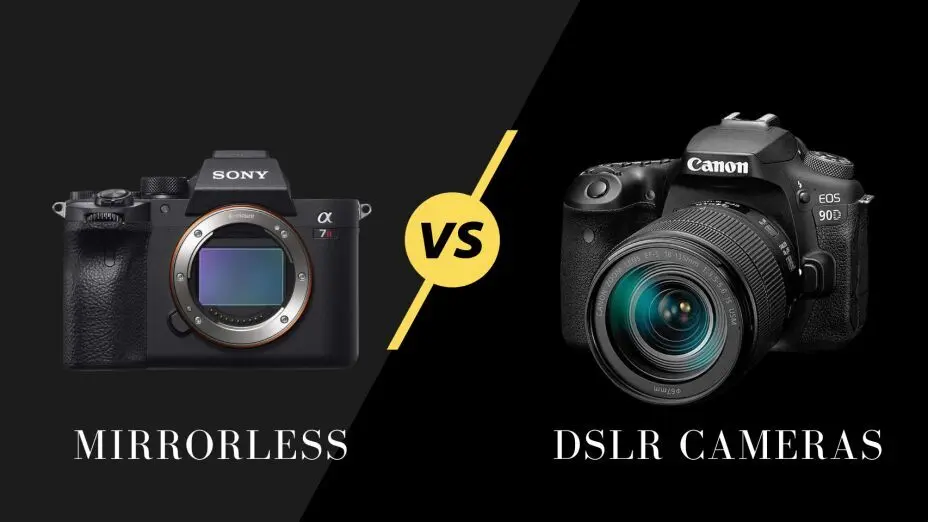
If you’re looking to
buy a camera in 2025, you’ve probably noticed that
the debate between mirrorless vs. DSLR is still
alive—but with some significant shifts. Mirrorless cameras
continue to dominate the market, with brands like Sony,
Canon,
and Nikon pushing
advancements in AI-powered autofocus, improved sensor technology,
and enhanced video capabilities. Sony’s latest BIONZ
XR processor has drastically improved real-time
tracking, Canon has introduced an updated RF lens lineup with
advanced image stabilization, and Nikon’s Z series now features
cutting-edge subject recognition powered by deep learning
algorithms. These innovations make mirrorless cameras even more
powerful for both photographers and videographers. Meanwhile,
DSLRs, while still available, are seeing fewer new models as
manufacturers push forward with mirrorless technology.
So, which one should you get? That depends on your needs. Whether you’re a beginner, a travel vlogger, or a professional photographer, each system has its strengths and weaknesses. Let’s break it down and help you make the best decision.
Mirrorless vs. DSLR: Key Features and Differences
| Feature | Mirrorless | DSLR |
|---|---|---|
| Size & Weight | Compact, lightweight | Bulkier, heavier |
| Autofocus Speed | Fast, advanced AI-powered tracking | Reliable but slower in live view |
| Battery Life | Shorter due to electronic viewfinder | Longer with optical viewfinder |
| Lens Options | Expanding, but still fewer than DSLR | Extensive range, especially used lenses |
| Viewfinder | Electronic (EVF) or LCD screen | Optical viewfinder (OVF) |
| Low-Light Performance | Improved with better sensor technology | Still great, especially with larger bodies |
| Video Capabilities | 8K and 4K support with better stabilization | Good, but lacks advanced video features |
| Price Range | Can be expensive but varies | More affordable entry-level options |
Looking at the table above, it’s clear that mirrorless cameras excel in portability, video capabilities, and autofocus technology, while DSLRs still offer advantages in battery life, lens availability, and traditional optical viewfinders. Now, let’s go deeper into who should choose which system.
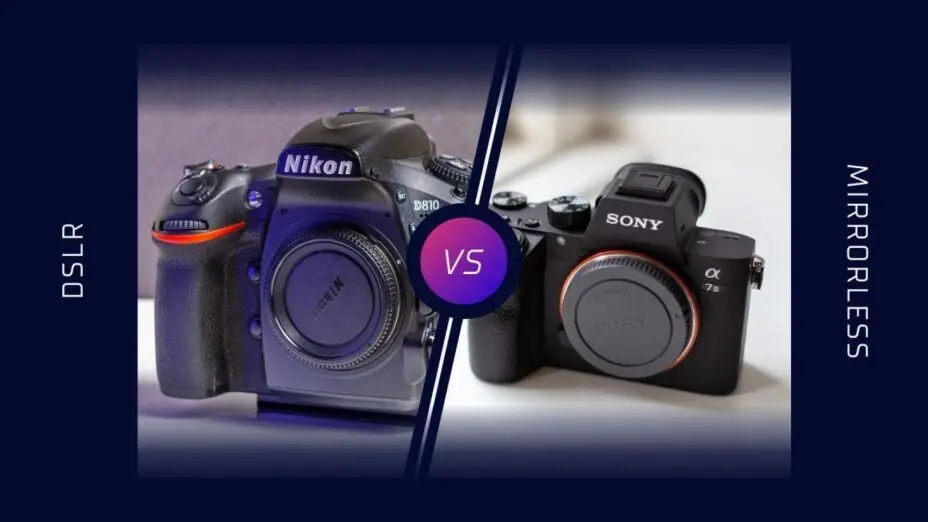
Who Should Choose a Mirrorless Camera? (Best Mirrorless Cameras 2025)
Best for:
- Travelers & vloggers who need a compact and lightweight setup.
- Videographers looking for high-quality 4K/8K video and better in-body stabilization.
- Beginners & hobbyists who want a modern, user-friendly experience with smart features.
- Tech-savvy photographers who love AI-powered autofocus, face/eye detection, and live previews.
Top Mirrorless Cameras of 2025
- Sony A7R V: A high-resolution full-frame mirrorless for professionals.
- Canon EOS R5 Mark II: Incredible for video and photography.
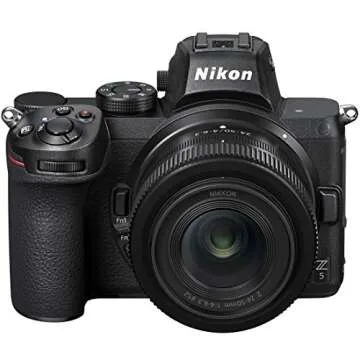
- Nikon Z8: A powerful hybrid camera for all-around use.
- Fujifilm X-T5: A stylish APS-C option for travel and street photographers.
- Panasonic Lumix GH7: A video-focused powerhouse with amazing stabilization.
Who Should Choose a DSLR Camera?
While DSLR cameras still offer great performance, their future is uncertain as major manufacturers shift focus to mirrorless systems. Production of new DSLR models has slowed, and some brands have announced plans to discontinue certain product lines. However, DSLRs remain a reliable choice for many photographers, particularly those who prefer an optical viewfinder, need extended battery life, or want access to a vast selection of existing lenses.
Best for
- Traditional photographers who love the feel of an optical viewfinder.
- Budget-conscious buyers looking for high-quality used DSLR lenses and bodies.
- Wildlife & sports photographers who rely on battery life and durability.
- Those who already own DSLR gear and don’t want to switch.
Top DSLR Cameras Still Worth Buying in 2025
- Canon EOS 90D: A great mid-range DSLR with solid image quality.
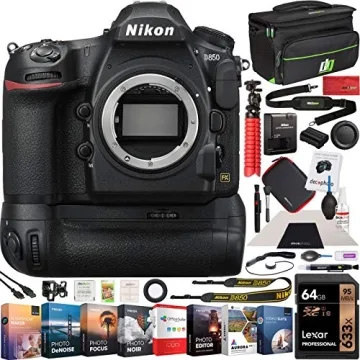
- Nikon D850: A legendary DSLR with a high-resolution full-frame sensor.
- Canon EOS 5D Mark IV: A classic full-frame workhorse.
- Nikon D7500: A budget-friendly option with great performance.
- Pentax K-1 Mark II: one of the last high-end DSLRs still in production.
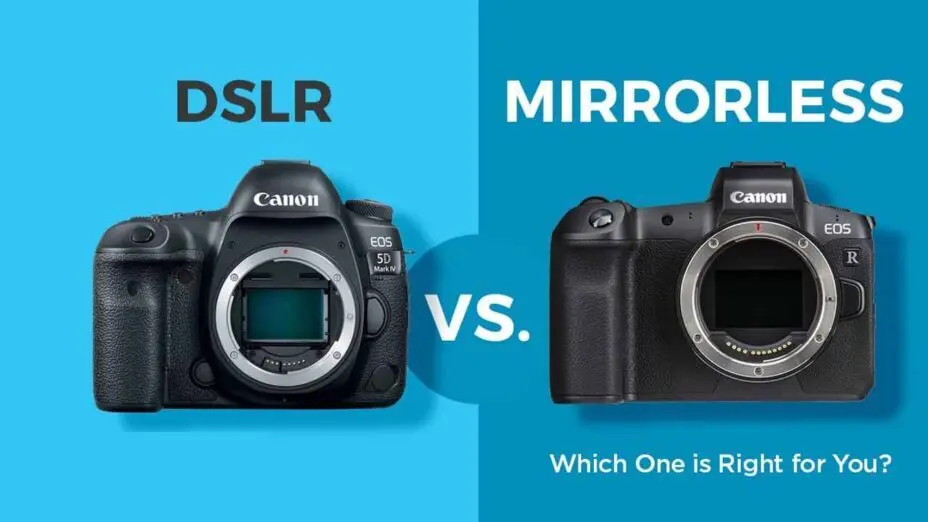
How to Choose the Right Camera for You in 2025
When picking between a mirrorless and DSLR, ask yourself:
✔ Do you prioritize portability? → Go
mirrorless.
✔ Do you prefer longer battery life? → Go
DSLR.
✔ Are you focused on video? →
Mirrorless wins with better stabilization and 8K
support.
✔ Do you already own DSLR lenses? → Stick with a
DSLR unless you’re ready to switch.
✔ Do you want cutting-edge autofocus and AI
features? → Mirrorless is the
future.
✔ Are you on a tight budget? → You can find
affordable DSLRs and lenses in the used market.
FAQs
Q1: Are DSLRs being phased out?
A1: Yes, major manufacturers are gradually
discontinuing new DSLR models in favor of mirrorless cameras.
However, DSLRs remain available in the used market and are still
a great option for certain photographers.
Q2: Which is better for beginners, mirrorless or
DSLR?
A2: Mirrorless cameras are generally better for
beginners due to their compact size, advanced autofocus, and
real-time digital previews, making them easier to use and learn
with.
Q3: Do professionals still use DSLR
cameras?
A3: Some professionals still use DSLRs,
particularly for sports and wildlife photography, where battery
life and optical viewfinders are advantages. However, many are
transitioning to mirrorless systems for their superior autofocus
and video capabilities.
Final Verdict: Is Mirrorless the Future?
Yes, mirrorless cameras are the future. Most major brands are phasing out new DSLR models, and mirrorless cameras are improving in battery life, autofocus, and lens selection. If you’re investing in a system for the next 5–10 years, mirrorless is your best bet.
One of the biggest advancements in mirrorless technology is the integration of AI and computational photography. Features like real-time subject tracking, automatic scene optimization, and AI-assisted noise reduction have made mirrorless cameras smarter and more capable than ever. These improvements allow photographers to achieve professional-quality results with less manual adjustment, making mirrorless systems ideal for both beginners and experienced users looking for efficiency.
However, DSLRs still have a place for those who love the optical viewfinder, need longer battery life, or want a budget-friendly system.
Bottom Line
- Choose mirrorless if you want cutting-edge features, lighter gear, and future-proof technology.
- Stick with DSLR if you prefer an optical viewfinder, longer battery life, and cost-effective options.
No matter what you choose, the best camera is the one that helps you create the images you love!
Which one are you leaning toward—mirrorless or DSLR? Let’s discuss in the comments!







 Continue with Google
Reviews