


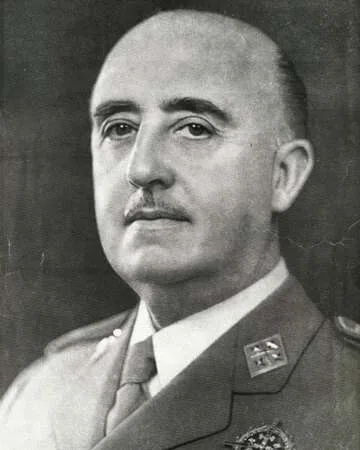
The Church's Backing for Francisco Franco
In 1937, during the tumultuous times of the Spanish Civil War, the support of the Spanish bishops for General Francisco Franco played a pivotal role in the evolution of the conflict. As Spain was deeply divided between the Republicans, who sought a democratic and socialist government, and the Nationalists, led by Franco, the Catholic Church’s endorsement of Franco not only lent legitimacy to his regime but also intensified the conflict.
Franco's Rise to Power
General Francisco Franco rose to prominence amidst a backdrop of political instability in Spain, following a military coup in 1936 against the leftist government. His leadership and the consolidation of military power soon attracted the attention and unwavering support of the Spanish bishops, who viewed him as a bulwark against Communism and secularism.
The Spanish Church's Ideology
The Catholic Church in Spain, heavily influenced by conservative ideologies, believed that it was vital to maintain traditional values in the face of what they perceived as an existential threat from socialist and anarchist forces. Hence, their open alignment with Franco’s fascist movement illustrated their commitment to preserving a Catholic Spain.
The Consequences of Clerical Support
The backing from the Spanish bishops effectively solidified Franco’s power, enabling him to position his Nationalist forces as the defenders of the faith. This ecclesiastical endorsement mobilized significant support from devout Catholics across Spain, contributing to the Nationalist cause and the continuation of the war.
Impact on the Spanish Civil War
As the conflict escalated, the Church’s influence further entrenched Franco’s regime, providing it with moral justification for its actions. The intertwining of religion and the military state not only legitimized Franco’s government but also perpetuated the cycle of violence against Republican supporters, who frequently faced persecution.
The Long-standing Effects on Spanish Society
The allegiance between the Church and Franco had lasting repercussions on Spanish society. After the war ended, the Catholic Church maintained its grip on power, often silencing dissent and shaping cultural and educational narratives to align with Francoist ideals. This relationship has been studied in depth as an example of how religion can intertwine with political movements, sometimes with devastating effects.
A Fascinating Fact About the Spanish Bishops
The Unique Position of the Spanish Bishops
One intriguing aspect of the Spanish bishops' support for Franco is that it was not just a unifying force for the church but also reflected deep divisions within the clergy themselves. While many bishops openly supported Franco, there were also prominent clergy members who opposed him, illustrating the complex dynamics within the Spanish Church during this period.
Recommended Reading on the Spanish Civil War
Books for Deeper Exploration
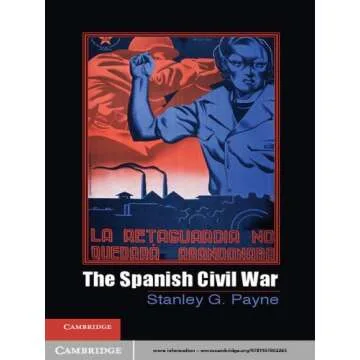
For those interested in further understanding the impact of the Spanish bishops’ support for Franco, consider the following readings: "The Spanish Civil War" by Hugh Thomas, which provides an extensive overview of the conflict, and "Franco: A Biography" by Paul Preston, which explores Franco's life and political maneuverings in more detail.




 Continue with Google