


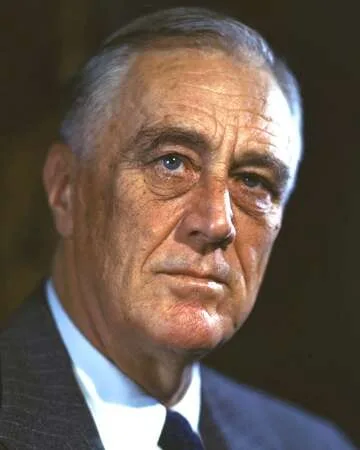
Historic Nomination of Franklin D. Roosevelt
The year 1932 marked a significant turning point in American politics with the nomination of Franklin D. Roosevelt as the Democratic candidate for President. The Democratic National Convention was held in Chicago, Illinois, amidst the backdrop of the Great Depression, which had left millions of Americans struggling for survival. Roosevelt's nomination signified the party's shift towards a leader who promised to bring change and hope during one of the country's most challenging economic times.
Franklin D. Roosevelt: A Leader in Troubling Times
Born in 1882 in Hyde Park, New York, Franklin Delano Roosevelt came from a prominent family and was well-educated, having attended Harvard University and Columbia Law School. His experience as the Governor of New York during the early 1930s set the stage for his presidential run. Roosevelt implemented a series of social and economic programs that were aimed at alleviating the economic distress of his state, which caught the attention of the national audience as the depression deepened.
The Chicago Convention: A Pivotal Moment
The Democratic National Convention in Chicago was filled with tension and excitement as delegates gathered to select a candidate who could challenge the incumbent president, Herbert Hoover. Roosevelt's political allies worked tirelessly behind the scenes to secure the necessary votes for his nomination. After several rounds of voting, Roosevelt emerged victorious, securing the nomination that would lead him on a path to the White House.
Roosevelt's Vision for America
Upon his nomination, Franklin D. Roosevelt articulated a vision of recovery and reform. He campaigned on the promise to address the economic challenges faced by the nation and initiated an optimistic future for Americans. His approach included what would later become known as the New Deal, a series of programs and policies focused on economic recovery.
Creating the New Deal
Roosevelt's commitment to innovative solutions for economic recovery distinguished him from previous leaders. He aimed to provide immediate relief for the needy, spur economic recovery, and enact financial reforms to prevent future depressions. His ability to communicate his vision effectively was a hallmark of his leadership style.
The Legacy of Roosevelt's Nomination
The nomination of Franklin D. Roosevelt had lasting effects on American politics and society. His election victory later that year transformed the Democratic Party and reshaped the role of government in the lives of Americans, proving to be a pivotal moment in U.S. history.
Fun Fact
Roosevelt's Four-Term Presidency
Interestingly, Franklin D. Roosevelt is the only president to have served more than two terms in office. He was elected four times, reflecting the public's trust in his leadership during the Great Depression and World War II.
Additional Resources
Recommended Reading on Franklin D. Roosevelt
For those interested in a deeper exploration of Franklin D. Roosevelt and his presidency, consider reading “Franklin D. Roosevelt: A Political Life” by Robert Dallek, which provides valuable insights into his life and decision-making processes.
![[1476795924] [9781476795928] Leadership: In Turbulent Times-Hardcover](https://assets.giftpals.com/assets/uc/Gift/kthxw0wKlcI5/1/thumbnail_default_1.webp?AgC6P08JXAl8)









 Continue with Google