


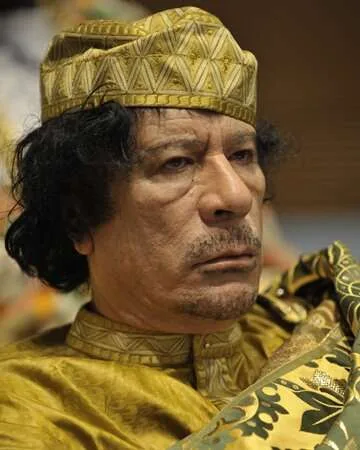
Muammar Gaddafi's Rise to Power
On September 1, 1969, a young military officer named Muammar Gaddafi led a coup in Libya that would set the stage for his eventual proclamation as the Chairman of the Libyan Revolutionary Command Council in 1970. This pivotal moment marked the beginning of Gaddafi's long and controversial rule over the nation. His vision was to transform Libya into a socialist state and to assert its independence from Western influence.
Gaddafi's Revolutionary Ideology
Upon declaring himself the leader, Gaddafi introduced his revolutionary ideas, which he chronicled in his notorious book, The Green Book. This text outlined his political philosophy, emphasizing direct democracy, socialism, and Arab nationalism. He aimed to create a government that reflected the will of the people, though in practice, his regime became notorious for its authoritarian nature.
The Libyan Revolutionary Command Council
As the Chairman of the Libyan Revolutionary Command Council, Gaddafi exercised absolute power. The council, comprised mostly of young military officers, implemented sweeping reforms across Libya, including land redistribution, nationalization of industries, and improvements in education and healthcare. While these reforms gained him support among certain segments of society, they also led to significant opposition and unrest.
Controversial Leadership and Global Impact
Throughout the 1970s and beyond, Gaddafi's leadership faced internal challenges and external criticisms. His foreign policy, characterized by a strong stance against Western imperialism and support for various revolutionary movements, further complicated Libya's position on the world stage.
Gaddafi's Military Engagements
Gaddafi's regime was marked by several military engagements and support for terrorist groups, which earned Libya international sanctions and isolation. His approach to governance and foreign relations often led to conflicts with states that opposed his ideologies, particularly the United States and several European nations.
Social Changes Under Gaddafi
Despite the controversies, Gaddafi made notable advances in various sectors, especially concerning women's rights and education. Women gained greater access to education and were encouraged to participate in the workforce, which was seen as progressive compared to many other Arab nations at the time.
Fun Fact
Capitalizing on Media Savvy
Gaddafi was known for his flamboyant public persona, often appearing in traditional Libyan dress and utilizing the media effectively to convey his revolutionary messages. He seized control of Libyan television and radio to broadcast his speeches and proclamations, ensuring that his ideas reached a broad audience.
Additional Resources
Recommended Reading on Muammar Gaddafi
For those interested in a deeper dive into Gaddafi's life and impact, consider "Gaddafi: The Trials of an African Dictator" by J. A. Kauffman or "The Green Book" itself for a firsthand insight into his ideology.












 Continue with Google