


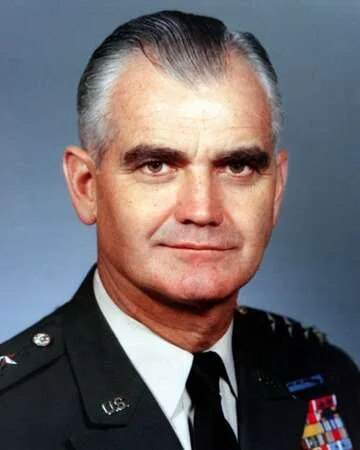
The Bold Claim of General William Westmoreland
General Westmoreland's Statement
On November 21, 1967, during a press conference in the height of the Vietnam War, America's chief military commander in Vietnam, General William Westmoreland, made a striking claim. He asserted, "I am absolutely certain that whereas in 1965 the enemy was winning, today he is certainly losing." This proclamation was intended to assure the American public that the tide of war was turning in favor of the United States. Westmoreland's confident rhetoric embodied the military strategy of attrition, which aimed to wear down the North Vietnamese forces through sustained American military pressure.
Context of the Vietnam War in 1967
By late 1967, the Vietnam War had escalated dramatically. U.S. troop levels had surged to over 500,000, reflecting the American commitment to what many viewed as a vital struggle against communism. Westmoreland emphasized the increasing body counts of enemy soldiers as evidence of American success, although the reality on the ground was much more complex and hazardous. The tactics employed by the United States often raised controversies, including the high civilian casualties and the environmental destruction caused by bombing campaigns.
Impact of Westmoreland's Confidence
The Fallout from His Statements
General Westmoreland's assertions had significant implications for U.S. policy and public perception. His declarations contributed to a growing sense of optimism among some in the U.S. government and military, reinforcing beliefs that victory was within reach. However, as the war dragged on and public opinion shifted, his confidence came under scrutiny. Many critics argue that such unwavering optimism obscured the harsh realities of the conflict.
The Shift in Public Sentiment
As the conflict continued, the stark contrast between Westmoreland's optimistic assertions and the grim realities faced by American soldiers on the ground fueled discontent. By 1968, the increasing frustration over the war's handling, exemplified by the unexpected Tet Offensive, dramatically changed public perception. General Westmoreland's claims ultimately became a symbol of the disconnect between military leadership and ground realities, contributing to a crisis of confidence that enveloped the American public and policymaking in years that followed.
Fun Fact
Westmoreland's Interesting Fact
Despite Westmoreland's optimistic projections, he was later criticized for his strategies and was replaced in 1968, during a tumultuous period for U.S. involvement in Vietnam.
Additional Resources
Recommended Reading on General William Westmoreland
For those interested in exploring more about General Westmoreland and the Vietnam War, consider reading "A Better War" by Lewis sorley and "Westmoreland: The General Who Lost Vietnam" by Lewis Sorley. These books provide profound insights into Westmoreland's strategies and their consequences.




 Continue with Google