


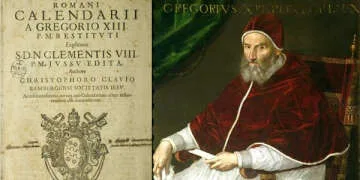
Introduction to the Gregorian Calendar
Understanding Julius Caesar's Calendar
The calendar system we use today, known as the Gregorian Calendar, has its roots in the earlier Julian Calendar, introduced by Julius Caesar in 46 BC. The Julian Calendar had a flaw: its year was slightly longer than the solar year, causing a gradual drift of the seasons. By the 16th century, this drift became significant, leading to a need for reform.
The Need for Change
By the time we reached the year 1582, the discrepancy between the Julian Calendar and the solar calendar had accumulated to about ten days. Pope Gregory XIII recognized the urgency of this issue to reclaim the calendar’s alignment with the equinoxes and the seasons. This realization led to the establishment of the Gregorian Calendar, which corrected the timing discrepancies for future generations.
The Adoption of the Gregorian Calendar in Holland & Flanders
First Day Observed: October 15, 1582
The Gregorian Calendar was first officially adopted in Catholic countries like Italy, Spain, and Portugal on October 15, 1582. However, the regions of Holland and Flanders, previously part of the Habsburg Netherlands, implemented the new calendar a year later, in 1583, marking January 1 as the 1st day of the Gregorian Calendar.
Impact on Society and Religion
The transition to the Gregorian Calendar was met with varying reactions. In the predominantly Protestant regions, this change faced resistance. Yet, the necessity for an accurate calendar prevailed, leading to gradual acceptance over time. This calendar provided a major improvement for religious observances and societal organization, allowing events to be celebrated on the correct dates, thus minimizing confusion.
Fun Fact
Calendar Conquest and Cultural Lag
Despite being adopted in 1582, the Gregorian Calendar met significant resistance in various regions for over a century, demonstrating how calendar reform could reflect deeper cultural and religious divides in Europe.
Additional Resources
Recommended Reading on the Gregorian Calendar
For those seeking to dive deeper into the fascinating history of our calendar, consider reading "The Calendar: Humanity's Epic Struggle to Determine a True and Accurate Year" and "A History of the Gregorian Calendar: From its Origins to the Modern Era". These texts provide insight into the importance of calendars in our understanding of time.













 Continue with Google