


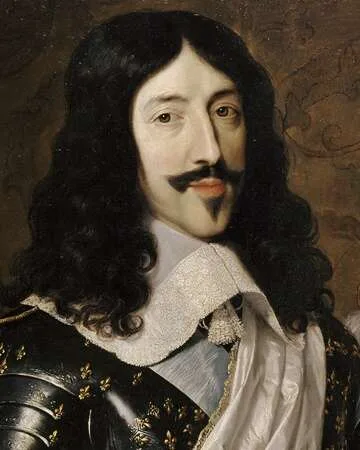
King Louis XIII's Early Ascension to Power
On May 14, 1610, the Parliament of Paris officially appointed Louis XIII as the King of France, marking a pivotal moment in French history. Born on September 27, 1601, Louis XIII took the throne at just eight years old, following the assassination of his father, King Henry IV. At this young age, Louis XIII was thrust into a challenging political landscape marked by instability and the need for measured governance.
Louis XIII: A Royal Childhood
Louis XIII was born in Palais de Fontainebleau and spent his early years surrounded by the opulence of the French royal court. However, with the untimely death of his father, he became king, but due to his tender age, the actual power was held by his mother, Marie de’ Medici, who acted as regent. Her influence and the turbulent political environment shaped his formative years, as various factions vied for control of the kingdom.
The Role of the Parliament of Paris
The Parliament of Paris played a crucial role in protecting the interests of the monarchy and the nobility. By officially recognizing Louis XIII as king, they sought to stabilize the monarchy amid the chaos following King Henry IV's assassination. This critical support provided a semblance of legitimacy and order during Louis's infancy, laying the groundwork for his future reign.
Navigating Challenges During Louis XIII's Reign
Louis XIII's tenure as king would be marked by numerous challenges, including issues of governance, internal dissent, and the increasing power of the nobility.
Internal Conflicts and Governance
As Louis XIII reached adulthood, he faced a divided nobility and rising tensions within the kingdom. With the guidance of his chief minister Cardinal Richelieu, Louis XIII was able to assert royal control over the fractious factions, ultimately diminishing the power of the nobility and centralizing authority in favor of a stronger French state. This shift would have long-lasting implications for the governance of France.
The Impact of Cardinal Richelieu
Cardinal Richelieu's influence on Louis XIII cannot be overstated; he was a master strategist who helped Louis XIII stabilize the monarchy. Richelieu's policies focused on consolidating power and weakening the Huguenots, leading to key military victories and strengthening France's position in Europe. Together, they transformed a vulnerable kingdom into a formidable power.
Fun Fact
Louis XIII and His Love for the Arts
Despite his political challenges, Louis XIII was a patron of the arts and played a significant role in the cultural development of France during the early 17th century. He commissioned numerous works and supported artists like Vincenzo Galilei, fostering a rich cultural milieu.
Additional Resources
Recommended Reading on King Louis XIII
To explore more about King Louis XIII's reign and impact, consider reading "Louis XIII, the Just" by R. J. Knecht for an insightful biography that delves into his life and legacy. Also, "The Age of Kings" by Robert Oreskovic provides context to the political dynamics of France during his reign.











 Continue with Google