


The Revolutionary Paper: De Motu Corporum in Gyrum
Isaac Newton's Contribution to Astronomy
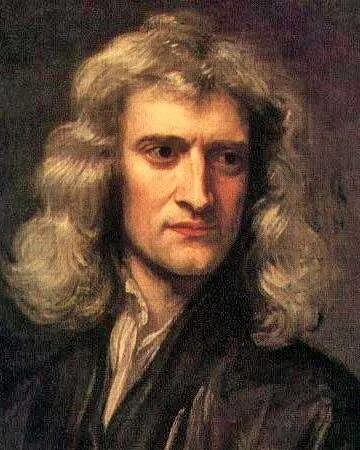
In 1684, Isaac Newton presented his seminal paper, De Motu Corporum in Gyrum, to the Royal Society in London. This groundbreaking work laid the foundation for understanding planetary motion and provided a mathematical framework that explained Kepler's laws of planetary motion through the lens of gravitation. Newton's insights indicated that the force keeping the planets in orbit around the Sun was the same force that caused objects to fall to Earth.
Edmond Halley's Role in Propagating Newton's Ideas
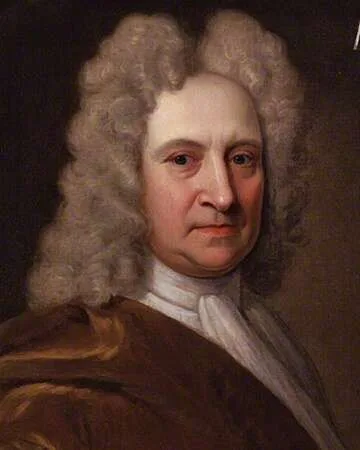
It was Edmond Halley, a prominent astronomer in his own right, who played a crucial role in bringing Newton's work into the public eye. Halley not only read Newton's manuscript at the Royal Society but also encouraged him to publish his findings. This collaboration ultimately led to the publication of Newton's masterpiece, the Principia Mathematica, which further embedded his ideas into the scientific canon.
The Impact of Newton's Work
Understanding of Universal Gravitation
Newton's exploration in the De Motu Corporum in Gyrum directly tied into his later formulation of the law of universal gravitation. He theorized that every mass attracts every other mass in the universe, which was a revolutionary idea at the time. This principle not only provided a mathematical description of planetary movements but also laid the groundwork for future scientists to explain gravitational force.
Revolutionizing the Scientific Method
Beyond its content, Newton's work marked a pivotal moment in the history of science, emphasizing the importance of mathematics in understanding natural phenomena. He demonstrated how precise mathematical formulas could explain complex celestial mechanics, shifting the paradigm towards a more analytical and formula-driven approach in scientific inquiry.
Fun Fact
Isaac Newton's Secretive Nature
Despite his monumental contributions to science, Isaac Newton was known for being exceptionally private. Many of his ideas, including those presented in De Motu Corporum in Gyrum, remained unpublished for years until external encouragement, primarily from Halley, propelled him to share his theories.
Additional Resources
Recommended Reading on Isaac Newton
For those interested in exploring more about Isaac Newton and his contributions to science, consider reading “The Principia: Mathematical Principles of Natural Philosophy” and “Isaac Newton” by James Gleick. These texts provide a deeper insight into his methodologies and the scientific revolution he catalyzed.










 Continue with Google