


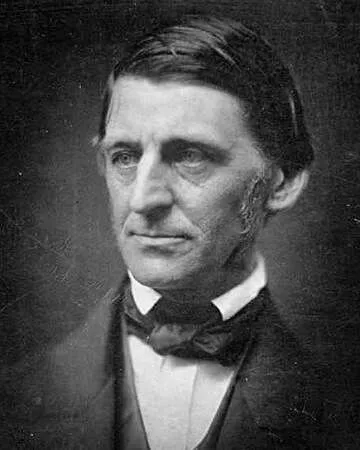
Ralph Waldo Emerson and the Birth of American Literary Thought
On August 31, 1837, Ralph Waldo Emerson delivered a groundbreaking speech entitled "The American Scholar" to the Phi Beta Kappa Society at Harvard College in Cambridge, Massachusetts. This momentous occasion is often regarded as a pivotal point in the history of American literature, signifying a **declaration of independence** from European literary traditions. Emerson's speech sought to inspire a generation of scholars to look inward and cultivate their own unique perspectives, rather than relying on European sources for cultural inspiration.
Emerson’s arguments resonated deeply with his audience, as he emphasized the need for America to forge its own identity in the realm of **intellect and creativity**. His assertion that American scholars should view themselves as equal contributors to the literary world marked a significant cultural shift. By asserting their independence, Emerson aimed to foster a sense of pride in American intellectual pursuits and cultural achievements, which were often overshadowed by European influence.
Emerson’s Vision of the Scholar
In his speech, Emerson described the concept of the scholar as not just a passive receiver of knowledge but an active **creator** of ideas. He urged scholars to engage with the world around them, stressing the importance of **experience** as a foundation for learning. According to Emerson, the scholar should be a transformer of society, utilizing their intellect to inspire change and innovation. This call to action encouraged many to embrace individuality and originality in their thoughts, leading to the emergence of a distinctly American literary voice.
The Impact of The American Scholar
Emerson’s ideas presented in "The American Scholar" had a profound impact on **American literature** and philosophy. Writers such as Henry David Thoreau and Walt Whitman drew inspiration from Emerson's emphasis on self-reliance and the importance of personal experience. This speech became a foundational text for the **Transcendentalist movement**, which promoted the idea that individuals could find truth and meaning through intuition and nature, rather than traditional institutions or established doctrines.
The Aftermath of Emerson's Speech
Following Emerson's influential speech, the American intellectual landscape began to change dramatically. Scholars and writers sought to cultivate a form of literature that was genuinely reflective of the American spirit, breaking away from the constraints of European literary forms.
Legacy of The American Scholar
The legacy left by Emerson through "The American Scholar" continues to resonate today. His perspectives on **self-reliance, creativity, and intellectual independence** have inspired countless generations to pursue their own paths and challenge established norms. Emerson’s bold challenge to American scholars paved the way for new literary movements, encouraging a culture of creativity that flourishes in America to this day.
Cultural Significance
The cultural significance of Emerson’s speech lies in its **timely** call for American authors and intellectuals to recognize their role in shaping a new identity. By encouraging Americans to value their own cultural contributions, Emerson inspired a sense of national pride and intellectual curiosity that was crucial for the development of the United States as a cultural powerhouse.
Fun Fact
Emerson’s Interesting Fact
Did you know that Ralph Waldo Emerson was also a prominent abolitionist? His beliefs in individual liberty extended beyond literature into social justice, making him a key figure in early American reform movements.
Additional Resources
Recommended Reading on Ralph Waldo Emerson
For those interested in exploring more about Emerson's life and thoughts, consider reading The Collected Essays of Ralph Waldo Emerson or Self-Reliance and Other Essays, both of which offer profound insights into the mind of one of America’s greatest thinkers.









 Continue with Google