


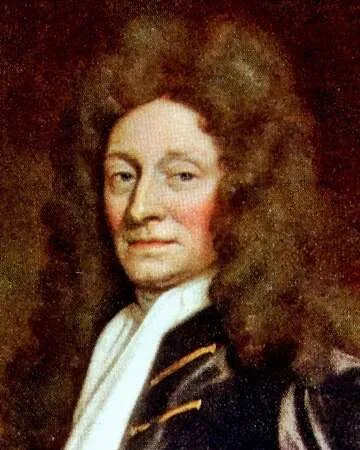
The Early Life of Christopher Wren
Christopher Wren’s Birth and Background
Born on October 20, 1632, in East Knoyle, Wiltshire, Christopher Wren would grow to become one of England's most notable figures in both architecture and astronomy. His father was a rector, instilling in him a strong appreciation for education and the sciences from an early age.
Wren’s Education and Early Interests
Wren was educated at the prestigious University of Oxford, where he initially pursued studies in natural philosophy and mathematics. His deep curiosity led him to explore astronomy, and he began to establish a reputation as a visionary thinker in sciences and architecture.
Christopher Wren’s Achievements and Legacy
Architectural Masterpieces by Wren
Wren is best known for his role in the reconstruction of St. Paul's Cathedral in London after the Great Fire of 1666. His design is not only an iconic symbol of London but also a masterpiece of Baroque architecture, reflecting his innovative approach to design and engineering.
Contributions to Astronomy
Apart from architecture, Wren was also significant in the field of astronomy. He contributed to the establishment of the Royal Society, promoting scientific inquiry and discovery. His interests culminated in several inventions and improvements to telescopes, demonstrating his versatile genius.
Fun Fact
Wren’s Other Interests
Christopher Wren had a profound interest in many sciences beyond architecture. He even designed a barometer and made sketches of various astronomical phenomena, showcasing his all-encompassing curiosity and intellect.
Additional Resources
Recommended Reading on Christopher Wren
For those looking to delve deeper into Wren’s life and work, consider reading "Christopher Wren: The Biography" by Adrian Tinniswood and "St. Paul’s Cathedral: An Illustrated History" by Richard W. Smith to grasp the full scope of his achievements.







 Continue with Google