


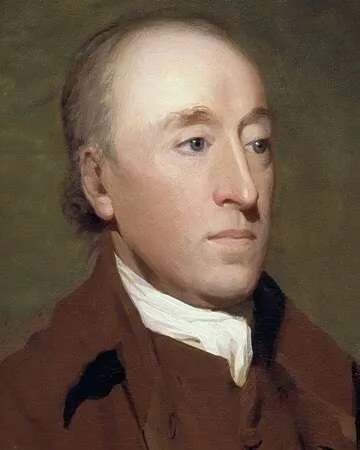
Introduction to Uniformitarianism
In the realm of geology, one of the most significant theories that reshaped our understanding of Earth's history is the concept of Uniformitarianism. First publicly presented by James Hutton in 1785, this theory posits that the processes shaping the Earth today are the same as those that have shaped it in the past. This revolutionary idea marked a pivotal shift from the then-dominant belief in catastrophism, which emphasized sudden, violent events as the primary drivers of geological change.
James Hutton's Revolutionary Theory
At a meeting of the Royal Society of Edinburgh, Hutton introduced his findings through an abstract that laid the groundwork for modern geology. He used detailed observations from his landscape studies and geological formations to argue that natural processes occur at a consistent rate, leading to gradual changes over vast time scales. Hutton famously expressed the idea with the phrase, "the present is the key to the past," highlighting the importance of studying present-day processes to understand historical geological formations.
Impact of Hutton's Presentation
Hutton's presentation was initially met with skepticism; however, it gradually gained traction among his contemporaries. His concepts of geological time and process not only influenced later geologists like Charles Lyell but also laid the groundwork for discussions on evolution, as it allowed scientists to appreciate the long timescales required for natural selection to take place.
Shifting Perspectives in Geology
The introduction of uniformitarianism represented a major paradigm shift in geology. Prior to Hutton’s ideas, many believed in a history of Earth marked primarily by catastrophic events like floods and eruptions. With Hutton’s work, the focus moved towards understanding the slow, perpetual processes that form rocks, soils, and landscapes over millions of years.
Uniformitarianism vs. Catastrophism
To fully appreciate the significance of uniformitarianism, one must recognize its contrast with catastrophism. Proponents of catastrophism argued that Earth's features were shaped by sudden and dramatic events. In contrast, Hutton's work emphasized that ongoing geological processes like erosion, sedimentation, and volcanic activity continue to shape the Earth in a consistent manner.
The Lasting Legacy of Uniformitarianism
Today, uniformitarianism is recognized as a fundamental principle in geology, influencing fields such as paleontology, climatology, and environmental science. Its adoption allowed geologists to reconstruct Earth's history more accurately, leading to a better understanding of the planet's past and potentially its future.
A Fun Fact about James Hutton
James Hutton's Influence Beyond Geology
A remarkable aspect of Hutton's legacy is that his ideas extended beyond geology. They influenced the natural sciences as a whole and shaped later theories in biology, especially with the evolution of the modern understanding of evolution articulated by figures like Charles Darwin, who appreciated the long timeframes necessary to effect change through natural selection.
Additional Resources
Recommended Reading on James Hutton
For those interested in exploring more about James Hutton and his contributions to geology, consider reading "The Theory of the Earth" by Hutton himself, as well as "The Principles of Geology" by Charles Lyell. These texts provide deeper insight into the concepts that transformed our understanding of Earth’s processes.













 Continue with Google