


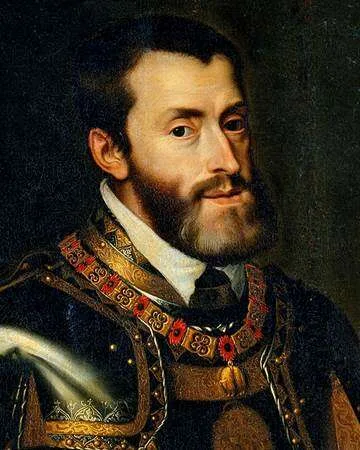
Understanding the Election of Charles V
In 1519, a significant event unfolded in European history as King Carlos I was elected as Holy Roman Emperor Charles V. This pivotal moment not only reflected the complex political landscape of the time but also set the stage for the rise of one of Europe's most powerful monarchs. As the grandson of the Habsburg dynasty, Charles V inherited vast territories, making him a formidable figure on the continent.
The Path to the Throne: Charles I of Spain
Born in 1500 in Ghent, Belgium, Charles was the son of Philip of Burgundy and Joanna of Castile. His mother's lineage tied him to the Spanish crown, while the Habsburg heritage from his father linked him to the Holy Roman Empire. In 1516, he ascended to the throne as King Carlos I of Spain, seeking to unify his diverse territories under a single crown, further asserting his influence on both Spanish and European politics.
The Election: A Battle of Influence
This election was the result of a political contest influenced by various European powers. Charles V faced his chief rival, Francis I of France, in a keenly contested election process. The selection of the Holy Roman Emperor relied on the votes of seven prince-electors, a group of influential leaders with significant authority. Charles successfully maneuvered diplomatically, leveraging his familial connections and promising concessions to secure the necessary votes.
The Impact of Charles V's Reign
Ascension to the title of Holy Roman Emperor marked the beginning of a transformative era for Charles V. His reign, lasting until 1556, saw the consolidation of power across Europe, as he navigated forces of religious conflict, expanding territories, and the rise of Protestantism.
The Religious Landscape Under Charles V
One of the most critical challenges faced by Charles V was the Protestant Reformation, which had begun the previous year. As a staunch supporter of Catholicism, he struggled to maintain religious unity within his empire as various regions began to adopt Protestant beliefs. His efforts to suppress the Reformation led to conflicts like the Smalkaldic War, accentuating the deep divisions present in Europe.
Territorial Expansion During Charles V's Reign
Beyond religious strife, Charles V's reign also witnessed extensive territorial expansion. He ruled over a vast domain that spanned from Spain to the Netherlands, parts of Italy, and much of Central Europe. His governance had significant implications for European politics, affecting trade routes and international relations.
Fun Fact
Charles V’s Interesting Fact
Upon stepping down from the throne, Charles V famously retired to the Monastery of Yuste in Spain, where he led a life of relative seclusion and contemplation, reflecting on his tumultuous reign and the responsibilities that came with it.
Additional Resources
Recommended Reading on Charles V
For those looking to delve deeper into the life of Charles V, consider exploring “Charles V: The World Empires' Last Monarch” by Robert W. Scribner, or “The Holy Roman Empire: A Very Short Introduction” by C. Scott Dixon, both of which provide valuable insights into his reign and influence.









 Continue with Google