


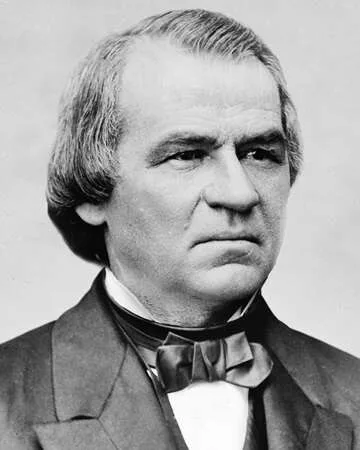
Introduction to the Impeachment of Andrew Johnson
The impeachment of President Andrew Johnson in 1868 was a pivotal moment in American history, marking one of the first major political battles surrounding the impeachment process in the United States. Following the assassination of Abraham Lincoln, Johnson, a Southern Democrat, assumed the presidency and faced enormous challenges during the Reconstruction era, particularly in navigating the delicate relationship between the North and the South.
Andrew Johnson's Presidency and the Conflict
Andrew Johnson became president after Lincoln's death in April 1865. His approach to Reconstruction was lenient toward the South, which angered many Radical Republicans in Congress who were pushing for more stringent measures to ensure the civil rights of freed slaves. As tensions escalated between the presidency and Congress, Johnson's conflicts with lawmakers set the stage for his impeachment.
The Tenure of Office Act
Johnson's troubles culminated in February 1868 when he violated the Tenure of Office Act, a law designed to restrict the president's power to remove certain officeholders without the Senate's approval. In a daring move, he dismissed Edwin Stanton, his Secretary of War, which led to his impeachment by the House of Representatives on charges of high crimes and misdemeanors.
The Senate Trial: The Struggle for Votes
After Johnson was impeached by the House, he faced a trial in the United States Senate. The atmosphere was charged, with the nation closely watching as senators deliberated on whether to remove a sitting president. The trial began in March 1868, and it was a fierce battle between the Republicans determined to oust Johnson and his supporters who defended his actions.
Key Moments of the Senate Trial
During the trial, various testimonies were presented, and defense attorneys argued that Johnson's actions did not warrant removal from office. The trial revealed deep political divisions, with some senators voting based on party loyalty rather than the evidence presented. Ultimately, the Senate voted on May 16, 1868, falling just one vote short of the two-thirds majority needed to convict Johnson and remove him from office.
The Significance of the Outcome
The failure to convict Johnson had lasting implications for the office of the presidency and the balance of power between the legislative and executive branches. It set a precedent regarding the misuse of impeachment as a political tool and underscored the fragility of post-Civil War unity in America.
Fun Fact
A Controversial Presidency
Andrew Johnson was the only president in U.S. history to be impeached by the House of Representatives but not removed from office by the Senate. His presidency remains one of the most controversial chapters in American political history.
Additional Resources
Recommended Reading on Andrew Johnson
For those interested in learning more about Andrew Johnson and his impeachment, consider reading "Andrew Johnson: The American Presidents Series" by Annette Gordon-Reed or "Impeachment: An American History" by Johnathan S. Allen and Amie Parnes for an in-depth exploration of this tumultuous time.












 Continue with Google