


The Formation of the Imperial League
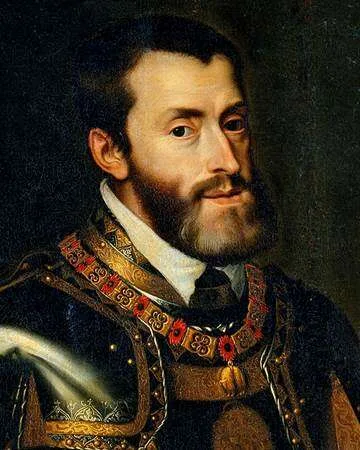
In 1547, during a turbulent period for the Holy Roman Empire, Holy Roman Emperor Charles V took decisive action by demanding the creation of the Imperial League. This move was prompted by the ongoing religious conflicts and political fragmentation that threatened the unity of the empire. Charles V, who ascended to the throne in 1519, sought to strengthen his authority over the German states, which were often at odds due to the Protestant Reformation and local rivalries.
The Vision of Charles V
Charles V envisioned a unified empire where all German princes would stand together, presenting a common front against external threats and internal discord. His demand for the Imperial League was not only about military cooperation but also about reinforcing the imperial authority in the face of rising Protestant movements. The emperor aimed to restore stability and to counteract the influence of Protestant leaders like Martin Luther and John Calvin.
The Response from the German States
The reaction to Charles V's proposal was mixed. While some rulers recognized the need for unity against common enemies, others were wary of imperial overreach and resented the idea of centralized control. The Imperial League ultimately aimed to create a defensive alliance among Catholic states, yet it highlighted the deep divisions within Germany regarding religion and governance.
Impact and Outcomes of the Imperial League
Though the Imperial League was initially formed to consolidate power, it struggled to effectively address the complex political landscape of the time. Charles V’s demand underscored the tensions between Catholic and Protestant states, which would continue to escalate in the years following the league's establishment.
Challenges to the Imperial League
The Imperial League faced numerous challenges, including lack of full participation from influential states and internal conflicts. Key territories, particularly those governed by Protestant rulers, resisted joining. This resistance ultimately weakened the league's effectiveness and prevented it from achieving Charles V's original vision of a united front.
Significance of the Imperial League
Despite its shortcomings, the Imperial League of 1547 marks an important chapter in the history of the Holy Roman Empire. It reflects the emperor's efforts to enforce order and unity amid growing sectarian divisions. The league's influence continued to be felt throughout the religious wars that followed, illustrating the profound impact of leadership choices during this era.
Fun Fact
Charles V's Ambitious Reign
Did you know that Charles V ruled a vast empire that spanned across Europe and the Americas? His reign included territories in Spain, Austria, the Netherlands, and Italy, cementing his role as one of the most powerful rulers of the 16th century.
Additional Resources
Recommended Reading on Charles V and the Imperial League
For those interested in deeper exploration, consider reading "Charles V: A Life in Letters" and "The Holy Roman Empire: A Thousand Years of History". These texts provide greater insights into the complexities of Charles V's reign and the political landscape of the Holy Roman Empire.












 Continue with Google