


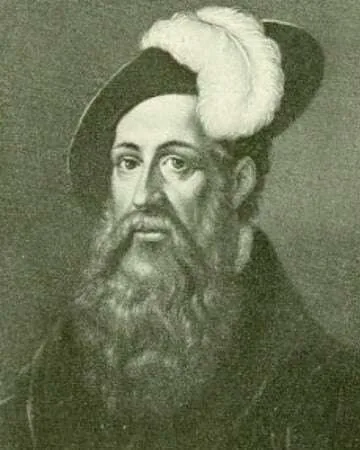
The Mainz Psalter: The Dawn of Printed Literature
The year 1457 marked a significant turning point in the history of printing and literature with the publication of the Mainz Psalter. This groundbreaking work was the first printed book to carry a complete date, establishing a remarkable milestone not only for the printing press but for accessibility to written texts in general. Johann Fust and Peter Schöffler, the masterminds behind this publication, revolutionized the way knowledge was disseminated, making it more widely available than ever before.
Johann Fust: The Financier of the Printing Revolution
Johann Fust, a wealthy goldsmith, played a crucial role in the inception of the Gutenberg printing press. His investment in Johannes Gutenberg's invention helped facilitate the development of movable type printing. Later, after parting ways with Gutenberg, Fust partnered with Peter Schöffler to produce the Mainz Psalter. Together, they aimed to achieve mass publication of religious texts, highlighting the transformative power of printed material.
Peter Schöffler: The Master Printer
Peter Schöffler took on the role of printer and compositor for the Mainz Psalter. His expertise in typesetting and his collaboration with Fust resulted in a beautifully crafted book featuring intricate woodcuts and an elegant layout. This stunning presentation showcased the potential of printed books and set a high standard for future publications.
Impact on Literature and Society
The Mainz Psalter demonstrated the significance of the printed word in the 15th century. As the first book to present a complete date, it set a precedent for future publications and marked the beginning of a new era in literacy and education.
The Democratic Nature of Print
With the release of the Mainz Psalter, access to religious texts expanded beyond monastic confines, allowing laypeople to engage with scripture. This democratization of knowledge played a crucial role in the spread of ideas during the Renaissance and contributed to societal shifts, ultimately leading to movements like the Reformation.
Legacy of the Mainz Psalter
The Mainz Psalter not only symbolizes the triumph of the printing press but also influences the trajectory of book production. Following this publication, the demand for printed materials skyrocketed, leading to the establishment of numerous printing houses across Europe, fostering a culture of reading that persists to this day.
Fun Fact
The Remarkable Printing Technique
Interestingly, the Mainz Psalter was printed using a technique involving movable type, created from metal letters. This method, perfected by Gutenberg and utilized by Fust and Schöffler, was revolutionary, allowing for efficient reproduction of texts and significantly reducing the cost of book production.
Additional Resources
Recommended Reading on the Mainz Psalter
For those interested in further exploring the Mainz Psalter and its significance, consider reading The Printing Revolution in Early Modern Europe by Elizabeth L. Eisenstein and Gutenberg: How One Man Remade the World with Words by John Man. These texts provide enriching insights into the impact of printing on society and knowledge dissemination.











 Continue with Google