


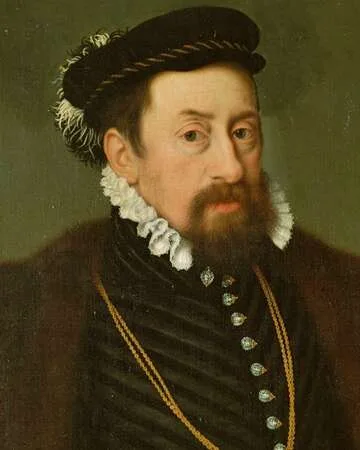
The Legacy of Emperor Maximilian II
In 1564, the Holy Roman Empire witnessed a significant transition in leadership as Maximilian II succeeded his father, Ferdinand I, as the Holy Roman Emperor. This pivotal moment marked the continuation of the Habsburg dynasty and paved the way for a complex era characterized by religious turmoil, political struggles, and efforts of reform.
Maximilian II’s Early Life
Maximilian II was born on March 31, 1527, in Vienna, Austria. Growing up within the opulent Habsburg court, he was educated in various areas including politics, diplomacy, and military strategy. His upbringing steeped him in the complexities of court life and equipped him with the skills necessary for leadership. These formative years would greatly influence his reign as emperor.
Maximilian II’s Vision for the Empire
Upon ascending to the throne, Maximilian II was determined to foster peace within the empire that was grappling with the consequences of the Protestant Reformation. Unlike many of his contemporaries, he favored a policy of tolerance towards Protestants, demonstrating his commitment to unity in a fractured realm. His reign is often viewed through the lens of his diplomatic efforts to ease religious tensions, which had threatened the integrity of the empire.
The Challenges Faced during Maximilian II’s Reign
Maximilian II’s rule was not without obstacles. During his leadership, the Holy Roman Empire faced external threats such as the rising power of the Ottomans. Additionally, internal strife and the growing independence of various principalities posed significant challenges. His endeavors to maintain a cohesive empire was a testament to the difficulties faced by many rulers of the time.
Religious Tensions during Maximilian II’s Era
The Protestant Reformation had splintered Europe into various factions, and Maximilian II had to navigate these turbulent waters carefully. He strived to uphold the religious concord and protect the rights of his Protestant subjects, which was a progressive stance for a Catholic emperor in the 16th century. His efforts to reduce religious discord can be seen as a significant aspect of his legacy.
Maximilian II’s Diplomacy with the Ottomans
In addition to internal issues, Maximilian II also contended with the Ottoman Empire’s expansionist aims. His diplomatic approach aimed at establishing peace treaties rather than military confrontations, highlighting his preference for negotiations. This strategy allowed for some periods of relative stability despite underlying tensions.
Fun Fact
Maximilian II’s Passion for Arts and Sciences
One interesting fact about Maximilian II is his support for the arts and sciences. He was a patron of many artists and scholars, contributing to the cultural landscape of the Habsburg court during his reign. His encouragement of intellectual pursuits left a lasting impact beyond his political endeavors.
Additional Resources
Recommended Reading on Maximilian II
For those interested in exploring more about Maximilian II and his era, I recommend reading 'The Habsburgs: A Very Short Introduction' and 'The Holy Roman Empire: A Very Short Introduction'. These books provide deeper insights into the complexities of his reign and the history of the Habsburg dynasty.






 Continue with Google