


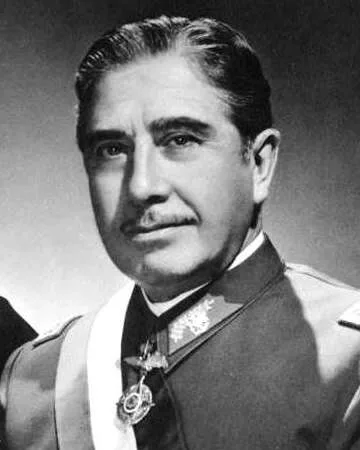
Understanding the 1974 Chilean Coup
The political climate in Chile was tense leading up to 1974, marked by deep divisions and conflict between opposing ideologies. This culminated in a military coup on September 11, 1973, which ultimately led to General Augusto Pinochet taking control of the government. Pinochet's rise to power signified a significant shift from a democratically elected government to a strict military dictatorship.
General Augusto Pinochet's Ascendancy
Augusto Pinochet, born in 1915, was a career military officer who rose through the ranks to become the commander of the Chilean Army. His involvement in the coup was pivotal, as he led the forces that overthrew the democratically elected President Salvador Allende. Following the coup, Pinochet assumed leadership and soon declared himself the head of a military junta.
Implementing Dictatorship
Once in power, Pinochet immediately dismantled democratic institutions and established a reign of terror characterized by political repression. Thousands of suspected dissidents were arrested, and reports of human rights violations began to surface, which became notorious during his rule. The regime employed censorship and propaganda to maintain control over the populace.
The Impact of Pinochet's Rule
Pinochet's regime brought about drastic economic measures under the guidance of the Chicago Boys, a group of economists who advocated free-market policies. While these policies resulted in economic growth, they also exacerbated inequality and further entrenched his regime's repressive measures.
The Legacy of Augusto Pinochet
The legacy of Pinochet remains a contentious topic in Chile. Many view him as a stabilizing force against communism, while others remember the brutality of his dictatorship, which lasted until 1990. His tenure has left deep scars in Chilean society, influencing politics and culture for decades to come.
International Reaction to the Coup
The coup and subsequent dictatorship drew international attention, particularly from the United States, which had a complex role in supporting the regime. The implications of U.S. involvement in Chile have led to ongoing debates regarding foreign policy and the moral responsibilities of nations.
Fun Fact
Pinochet's Unique Leadership Style
Pinochet was known for his austere public image and strict military demeanor. Interestingly, despite his authoritarian rule, he often presented himself in a fashion designed to invoke national pride and portrayed his regime as a necessary ‘sacrifice’ for the country.
Additional Resources
Recommended Reading on Augusto Pinochet
If you're interested in diving deeper into the life and impact of Pinochet, consider reading “The Pinochet File: A Declassified Dossier on Atrocity and Accountability” by Peter Kornbluh. Another insightful book is “Chile: The Other September 11” by Camilo Aguirre, which offers a compelling narrative about this pivotal event.








 Continue with Google