


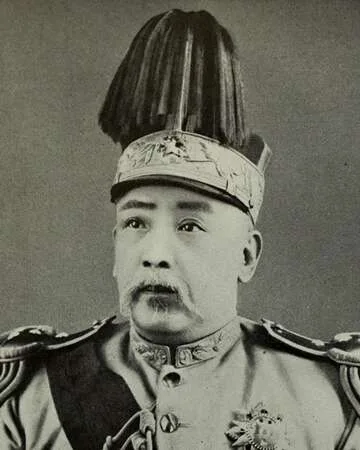
Yuan Shikai's Transformation of Governance in 1914
In 1914, a significant shift occurred in China's political landscape. The ambitious leader Yuan Shikai, who had previously played a crucial role in the fall of the Qing Dynasty, took steps to consolidate his power. He proposed a new structure of governance that replaced the existing provisional constitution with a constitutional compact. This new framework drastically expanded the powers of the President, allowing Yuan to wield extraordinary authority over the country's military, finances, foreign policy, and even the rights of the Chinese citizens.
The Implications of Yuan Shikai's Constitutional Compact
The constitutional compact Yuan implemented was designed to bolster his control and diminish the influence of other political forces. By centralizing power, Yuan aimed to stabilize China and avert any potential challenges to his leadership. This move, however, raised concerns among the populace and various factions who feared the emergence of a dictatorial regime.
Public Response to the New Powers
The reaction from the public and political elites was mixed. Supporters of Yuan viewed this as a necessary step for national unity and significant progress, while opponents criticized it as a blatant power grab that compromised the democratic principles established after the revolution of 1911. Protests erupted in various provinces, signalling a growing discontent with Yuan's authoritarian approach.
The Establishment of a Dictatorship
As the political tensions escalated, Yuan's consolidation of power took firm root, marking a pivotal moment in China's struggle between democratic ideals and authoritarian rule. The dictatorial powers granted to Yuan paved the way for his subsequent actions, including the suppression of dissent and the undermining of local governance.
The Military's Role in Yuan's Regime
The military played a crucial role in enforcing Yuan's new regime. With control over military forces, Yuan was able to stifle opposition effectively, further entrenching his power in the national government. This reliance on military force illustrated the fragile nature of governance in early Republican China.
The Impact on Civil Rights
Under Yuan's new directives, the rights of Chinese citizens were heavily curtailed. The emphasis on military control and state security overshadowed personal freedoms, causing widespread disillusionment among the populace. This shift highlighted the challenges of establishing a democratic society in a nation struggling with deep-rooted political and social dividations.
Fun Fact
Yuan Shikai's Fateful Decision
An interesting fact about Yuan Shikai is that despite his efforts to centralize power, he ultimately failed to maintain control, leading to his downfall and the eventual warlord era that would engulf China following his death in 1916.
Additional Resources
Recommended Reading on Yuan Shikai
To better understand Yuan Shikai and his impact on China's political landscape, consider reading "Yuan Shikai: China’s Emperor in Waiting" by Thomas H. H. Le and "The Warlord Era: Military Rule in China (1916-1928)" by H. B. A. Nehring.







 Continue with Google