


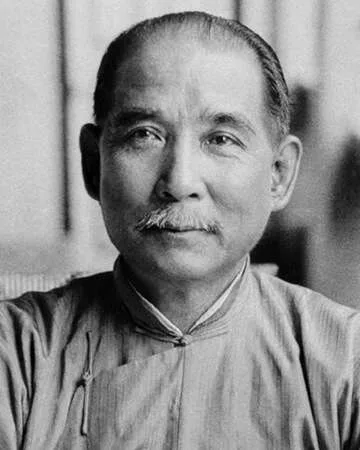
The Birth of T'ung Meng Hui
In the early 20th century, China faced immense political turmoil under the Qing dynasty. Many revolutionaries sought a change to restore power to the people and end centuries of imperial rule. In 1905, a pivotal event occurred—the formation of the T'ung Meng Hui, or the United League, led by the prominent revolutionary leader Sun Yat-sen. This organization brought together various secret societies that shared a common goal: to overthrow the Qing dynasty and establish a republic in its place.
T'ung Meng Hui emerged from the fervent atmosphere of nationalist sentiment fueled by a series of failed uprisings against the Qing. The organization became a vital force in the push for modernization and democracy in China. It aimed to unite diverse groups, including students and expatriates, in a collective effort against the corrupt Qing regime.
Sun Yat-sen and His Vision
Sun Yat-sen, born in 1866 in Xiangshan, Guangdong province, became a key figure in the Chinese revolutionary movement. His vision extended beyond mere rebellion; he dreamed of a China free from foreign oppression and ruled by its people. By establishing T'ung Meng Hui, he sought to provide a structured movement capable of organizing efforts against the Qing government with a detailed strategy that included political activism and armed revolt.
The Role of Secret Societies
At the heart of T'ung Meng Hui were various secret societies that had long existed in China, often involved in clandestine activities against the Qing. These societies, such as the Green Gang and the God Worshippers Society, provided a foundation of support and resources for the revolutionary movements. By uniting under T'ung Meng Hui, these groups aimed to strengthen their efforts and coordinate their actions against the dynasty.
The Impact of T'ung Meng Hui
The formation of T'ung Meng Hui had significant repercussions for China's future. It marked the beginning of an organized revolutionary movement that eventually led to the 1911 Revolution, which resulted in the fall of the Qing dynasty and the establishment of the Republic of China. The ideals and principles propagated by Sun Yat-sen and T'ung Meng Hui would influence generations of political thought and activism in China.
Mobilizing Support for the Revolution
T'ung Meng Hui played a crucial role in mobilizing public support for the revolutionary cause. Through pamphlets, speeches, and rallies, Sun Yat-sen and other leaders communicated the importance of change, promoting ideas of democracy and nationalism. Their efforts galvanized support from various demographics, including students, intellectuals, and even foreign sympathizers.
Legacy of T'ung Meng Hui
Today, T'ung Meng Hui is remembered not only for its revolutionary activities but also for its legacy of unity and determination in the fight for a free China. Sun Yat-sen's foundational principles of nationalism, democracy, and people's livelihood continue to resonate in Chinese politics and society. The organization remains a symbol of resistance against tyranny and a catalyst for the establishment of a modern state.
Fun Fact
Sun Yat-sen’s Vision of a New China
Interestingly, Sun Yat-sen is often referred to as the "Father of Modern China" due to his pivotal role in the revolution and his enduring ideas for a republic. His three principles—nationalism, democracy, and the people's livelihood—formed the basis of modern Chinese political thought.
Additional Resources
Recommended Reading on Sun Yat-sen
For those interested in deeper exploration of Sun Yat-sen's life and ideas, consider reading "The Life and Times of Sun Yat-sen" by Arthur Waley and "Sun Yat-sen: His Life and Revolution" by Paul A. Cohen to gain greater insight into the cultural and political impacts he made on China.



![[Anne Applebaum ]-[Twilight of Democracy]-[Hardcover]](https://assets.giftpals.com/assets/uc/Gift/G5RWdXPc2dNJ/1/thumbnail_default_1.jpeg?WimJhGRTAzyI)



 Continue with Google