


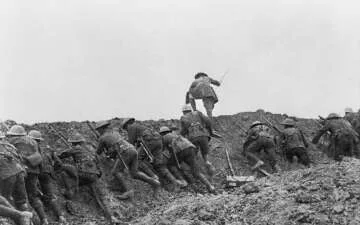
The Battle of the Somme: A Pivotal Moment in World War I
The First Day of the Battle of the Somme, July 1, 1916, marks one of the darkest chapters in military history. The British Army faced unprecedented losses on this day, suffering a staggering total of 19,240 fatalities and more than 38,000 wounded within just a few hours of combat. The battle aimed to relieve pressure on French forces at Verdun and break through German defenses along the Somme River in northern France.
The Plan Behind the Carnage
The Allied command believed that a well-coordinated artillery bombardment would incapacitate German troops enough for British soldiers to advance safely. However, their expectations were catastrophically miscalculated. Many of the artillery shells failed to explode or simply did not destroy the well-fortified German trenches. As a result, when the British troops went over the top, they faced hailstorms of machine-gun fire in no-man's land.
Conditions on the Battlefield
The conditions on the battlefield were notoriously harsh, contributing to the heavy toll. Soldiers waded through mud and water, often up to their knees, creating a treacherous environment where mobility was severely hampered. The phrase "Five Miles of Mud" became synonymous with the horrific conditions encountered by the troops.
Aftermath and Legacy of the First Day
In the aftermath of the first day of the Battle of the Somme, the enormity of the British losses shocked the nation. *The Sunday Times* published the casualty figures, leading to widespread grief and outrage across Britain. The sheer scale of the tragedy is often highlighted as a testament to the brutality of trench warfare and the high human cost of World War I.
Impact on Military Strategy
The dismal outcome prompted military leaders to reconsider their strategies. The initial hope for a quick victory faded, and the battle would continue on for several more months, resulting in an estimated total of around 1 million casualties by its end in November 1916. The first day's events would later be used as a case study in military strategy, emphasizing the necessity of thorough planning and the grim reality of modern warfare.
Memorializing the Fallen
In recognition of the sacrifices made, several memorials have been established, including the Thiepval Memorial, which honors over 72,000 missing British and South African servicemen. These sites serve as poignant reminders of the individual lives lost and the collective tragedy of war.
Fun Fact
The Somme’s Infamous Poet
One of the notable soldiers who fought at the Battle of the Somme was the war poet Wilfred Owen, who later penned poignant verses about the realities of World War I. His tragic experiences during the war deeply influenced his powerful poetry, capturing the harrowing nature of the conflict.
Additional Resources
Recommended Reading on the Battle of the Somme
For those interested in delving deeper into the subject, consider reading "The Somme: The Darkest Hour on the Western Front" by Peter Hart or "The First Day on the Somme" by Martin Middlebrook. These works provide insightful perspectives into the battle's complexities and its lasting impact on history.








 Continue with Google