


The Remarkable Life of Alex, the African Grey Parrot
In the world of animal cognition, few stories are as compelling as that of Alex, a truly remarkable African Grey parrot who made waves in the field of avian intelligence. Born in 1976, Alex was the subject of a groundbreaking 30-year study conducted by Dr. Irene Pepperberg, a cognitive psychologist known for her work in animal cognition. Alex's ability to communicate and problem-solve not only challenged our perceptions of avian intelligence but also opened doors to a deeper understanding of animal capabilities and cognition.
Alex was not just a pet bird, but a pioneering research subject whose skills in counting, using the concept of zero, and identifying colors and shapes were revolutionary at the time. His profound behavioral feats have sparked interest in how we interpret animal intelligence and communication.
Alex: A Studious Bird
Under the watchful eyes of Dr. Irene Pepperberg, Alex learned to communicate in English, utilizing over 100 words to express himself. One of his famous phrases was, "Want a cracker?", which he would use to engage with his trainers and for social interaction. The relationship between Alex and Dr. Pepperberg was not just that of a researcher and a subject; they shared a bond that was built on trust and mutual respect. Dr. Pepperberg often referred to Alex as a student rather than just a test subject, emphasizing the intelligence and emotional depth of the bird.
Alex’s Contributions to Science
Alex's legacy is firmly established in the scientific community as pioneers in the study of language and cognition in animals. His ability to understand abstract concepts, such as shapes and colors, suggests a level of cognitive functioning that was previously underestimated in non-human species. His contributions have encouraged further research into animal intelligence, shifting the narrative from viewing animals as mere instinct-driven beings to recognizing their capability for complex thought and learning.
The Impact and Loss of Alex
Sadly, Alex passed away in 2007, leaving a significant void in the hearts of many who had followed his journey. His death was not just a personal loss for Dr. Pepperberg, but also for the scientific community that had engaged with his story. His passing raised questions about the future of avian research and the ethical considerations of such studies.
Remembering Alex
After Alex’s death, Dr. Pepperberg continued her research, advocating for the importance of understanding animal behavior and cognition. She often reflects on Alex’s insightful nature and how he changed the way we view our feathered friends. His legacy continues to influence current and future studies in animal cognition, reminding us of the intelligence that lies within species we share our planet with.
Alex's Influence on Animal Rights
Following Alex’s incredible displays of intelligence and social interaction, animal rights activists have pushed for better treatment and understanding of avian species. Alex has become a symbol of the need to treat animals with respect and to recognize their cognitive abilities, urging society to reconsider how we care for and interact with non-human animals.
Fun Fact
Alex’s Interesting Trivia
One interesting fact about Alex is that he could accurately identify objects even when they were grouped with other similar items. This shows not only memorization but also understanding—a hallmark of true intelligence!
Additional Resources
Recommended Reading on Alex the Parrot
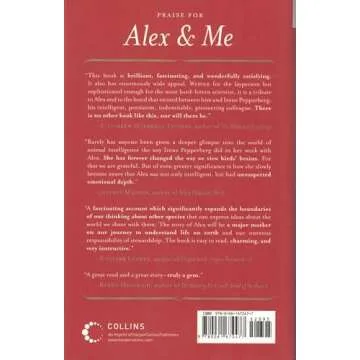
For those interested in exploring more about Alex’s groundbreaking story, consider reading Dr. Pepperberg's book “Alex & Me”, which provides a deep insight into the relationship between the parrot and his trainer, as well as the findings from the research.







 Continue with Google